Categories
lawlibrary Maryland Law

National Inventory of Primary Legal Materials

The American Association of Law Libraries (AALL) believes that the public should have “no-fee, permanent public access to authentic online legal information on government Web sites” as stated in the Government Relations Office Issue Brief, AALL Working Groups to Ensure Access to Electronic Legal Information.

The Government Relations Office of AALL has coordinated a major project, the National Inventory of Primary Legal Materials, to collect information on the availability of all primary legal materials in the United States at every level of government from the judicial, legislative and executive branches.  Once information from all fifty states, D.C. and the Federal Government is collected, it “will be analyzed and used by experts working with  LAW.gov, the Law Library of Congress and AALL public policy committees according to the Issue Brief.  The data will provide a picture as to the availability of primary legal material.  The inventory collects such information as the availability of online and print versions and whether the material is copyrighted.  Other information collected for the inventory for online materials include provisions for authentication, preservation and permanent public access.

Authentication ensures that online  information is, in fact, the law.  This is done through the use of certifying marks and the establishment of chain of custody of the electronic document.  A more detailed description of authentication can be found in the Executive Summary of the AALL State-by-State Report on Authentication of Online Legal Resources Full Report.

It is important that electronic online legal materials be preserved by an appropriate government entity.  Print resources are easily preserved by court libraries and archives by storing the books in a proper environment.  Digital information presents a problem.  The technology for methods and media for accessing electronic information can change quickly.  Preservation would involve making sure that the digital information migrates to new platforms as technology changes.  The preserved information should remain accessible to the public permanently. The above principles were outlined in  the AALL policy paper, Principles and Core Values Concerning Pubic Information of Government Websites.

Maryland law librarians formed a Working Group to address the issues of authentication, preservation and permanent public access.  The Working Group has contributed to the National Inventory of Primary Legal Materials by collecting the information for Maryland primary legal materials.  The project was completed as of June 1, 2011.  All of the information was entered into a Google spreadsheet for the sate, county and municipal levels all of the  branches of Maryland government.  The Maryland Inventory Spreadsheet will be added to the information collected by other state working groups to form the National Inventory of Primary Legal Materials.
Categories
lawlibrary

2011 Maryland Access to Justice Commission Awards

The 2011 meeting of the Maryland Judicial Conference held on May 13 began with the awarding of the first Access to Justice Awards.    “The awards recognize individuals, programs and entities in the State that improve the ability of all Marylanders to access the courts or to get legal help in civil legal matters so they can benefit from the rights, protections, services and opportunities that the law provides.”

I am honored to report that I was the recipient of one of those awards, the Judicial Branch Excellence Award.  It was exciting to be on the program with Governor Martin O’Malley who received the Executive Branch Award, Judge Ben Clyburn who received the Judge of the Year Award,  and Sen. Brian Frosh who with Del. Kathleen Dumais was a joint honoree for the Legislator of the Year Award and with Matt Hill of the Tenants in Foreclosure Project which received the Outstanding Program of the Year Award.

Governor O’Malley was recognized for his quick response to the mortgage foreclosure crisis with the creation of the Foreclosure Mediation Program in 2010.

Hon. Ben Clyburn is the Chief Judge of the Maryland District Court and the Vice-Chair of the Maryland Access to Justice Commission.  As a member of the commission, I have witnessed first hand his dedication to improving access to justice.  Whenever a problem for access to justice is identified he immediately addresses the issue.  He was cited for creating the  Glen Burnie District Court Self Help Center and how he has addressed the problems of debtors in District Court.  Judge Clyburn is even able to address access to justice concerns as he works to create the new statewide case management system.

The Public Justice Center received the Program of the Year Award for its Tenants in Foreclosure Project.  In addition to advocating for their clients, the Center was instrumental in the changes to Maryland law and rules that protect tenants in foreclosure.

The Legislator of the Year award went to Sen. Brian Frosh and Del. Kathleen Dumais for their work in the 2010 legislative session that lead to the passage of HB106/SB248.  This legislation increased surcharges on court filing fees for the funding of legal services in Maryland.

I received the Judicial Branch Excellence Award for the library’s self-help and training programs and for the use of Web 2.0 technologies in these efforts.  Having been nominated for the award by my colleagues in the law library and public library community means more to me than I can properly say.

In his brief remarks the Governor stated “that often the difference between justice and injustice is access.” I am pleased that the programs instituted here in the law library have been recognized as contributing to this access.

Categories
lawlibrary

Family Self Help Center has moved to the Law Library

Today was the first day that the Family Law Self Help Center operated as part of the law library.  The actual move took place on Friday.  The Center assisted 32 people today with the majority arriving before noon.  This made for an interesting, no time to think about it,  adjustment.  We will be working out the logistics as time goes on.

The library and the center have always cross referred. It could be difficult for the clients who would have to trek back and forth between the second and third floors.  Now all of the self help resources are in one spot making it easier for the center and library to collaborate.

The hours of the Family Law Self Help Center will remain the same:

Monday 9:00 a.m. – 4:30 p.m.
Tuesday 9:00 a.m. – 1:00 p.m.
Wednesday 9:00 a.m. – 4:30 p.m.
Thursday 9:00 a.m. – 4:30 p.m.
Friday 9:00 a.m. – 1:00 p.m.
Categories
lawlibrary

Anne Arundel County Homeless Resource Day to Serve as Model for the State

The Anne Arundel County Homeless Resource Day Wrap-Up meeting was held on Friday, April 8.  Service provider coordinators were invited to review the successes of the day and to plan for next year by discussing challenges encountered on the day and the service provider feedback.

County Executive John Leopold welcomed all meeting attendees as they arrived and thanked them individually.  The County Executive spoke to the group and stated  that he believes that it is the responsibility of this mostly affluent county to  meet the needs of those in need.  Leopold sees Homeless Resource Day as a great example of  the collaboration of  many different entities resulting in the delivery of concrete services without cost to those in need.   It was the county Executive who was behind Anne Arundel County’s first Homeless Resource Day four years ago.  After seeing such a program offered in another state, Leopold approached the Department of Social Services and asked that they implement the program in Anne Arundel.  DSS has coordinated the program ever since.

Governor Martin O’Malley, after reading about this year’s Homeless Resource Day, would like to replicate the Anne Arundel County program across the state.  Marcia Kennai, Director of DSS, reported that Cecil, Carroll, Montgomery and Baltimore counties are already planning a Homeless Resource Days to take place by next October.

Final statistics for the day reported at the meeting were even higher than first estimated.  There were 674 individuals served including 230 men, 207 women and 237 children.  I was able to report that eight attorneys served 70 individuals by providing legal advice to  answer 94 questions.

Categories
lawlibrary

Anne Arundel County Homeless Resource Day 2011

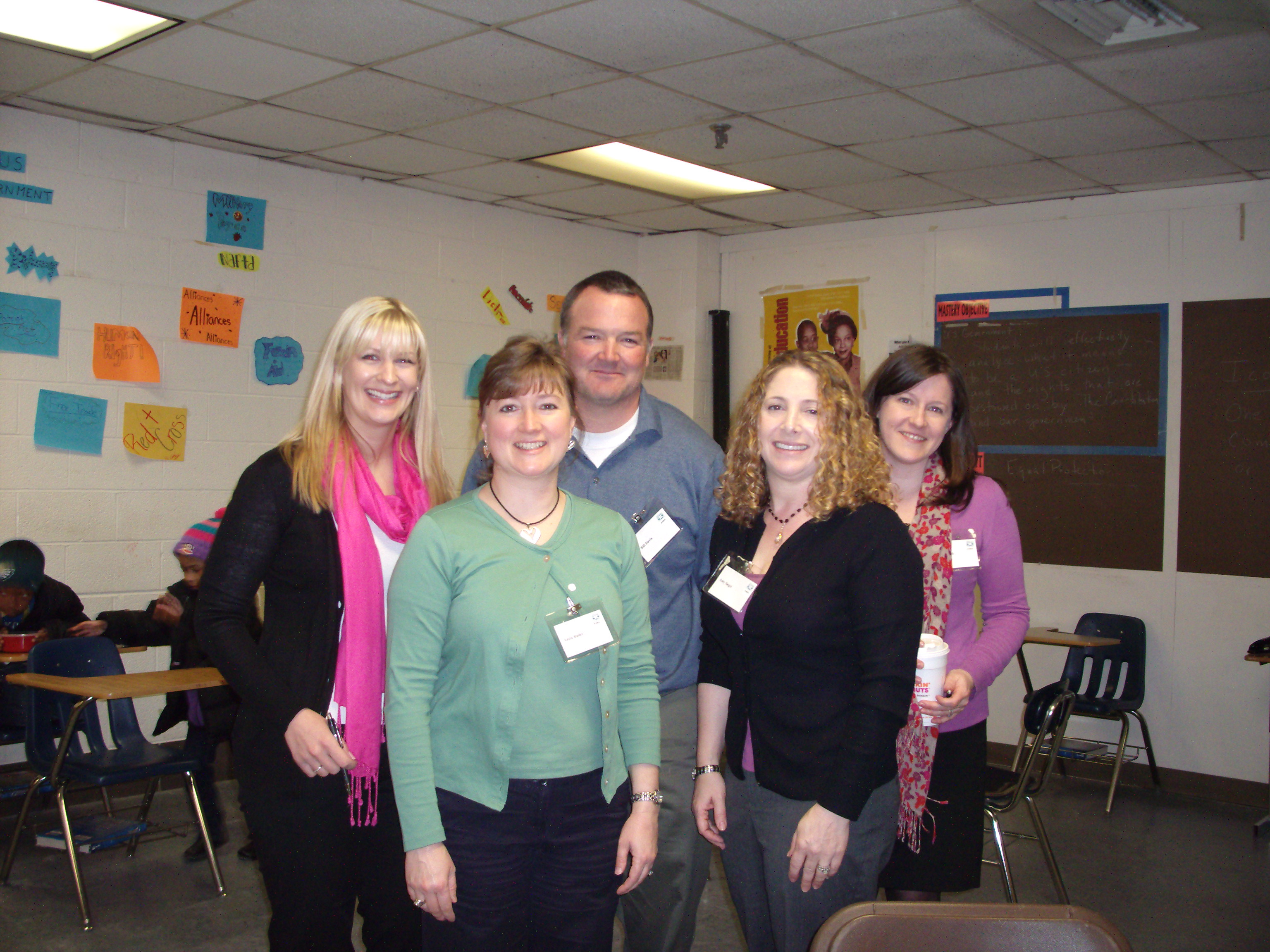
Homeless Day Volunteers: Anita Bailey, Amy Siegel, Lonni Summers, Bill Davis and Sarah Frush

Anne Arundel County Attorneys provided free legal advice to 70 people at this year’s Homeless Resource Day.  More people than ever took advantage of the 4th Annual Anne Arundel County Homeless Resource Day on Saturday, March 26, 20011.  For the first time ever, there were lines for services. 400 participants were reported in 2010 and more than 500 were counted this year.  The event was held at Glen Burnie High School from 8:30 a.m. until 4:00 p.m.  which is two hours more than last year.  In addition to legal services, participants received medical and dental care, could get a haircut, and meet with many benefit provider agencies.  The MVA was on site to provide IDs and vital statistics was there to provide birth certificates.

The wide range of expertise of the volunteer attorneys was essential to address the varied needs of those seeking legal advice.  Bill Davis, Public Defender and Anne Leitess, Assistant State’s Attorney were able to answer the many questions about criminal records and expungement.  Family law attorney Kari Fawcett and Anita Bailey, head of Anne Arundel County Legal Aid, were kept busy with the many family law questions.  Legal services benefited from the presence  of other Legal Aid attorneys Amy Siegel and Margaret Leonard who deal with the many issues facing the homeless every day.  The Legal Aid attorneys who staff the Glen Burnie Self Help Center, Sarah Frush and Lonni Summers, were also able to draw from their center experience to help the homeless.

45 people were served last year.  This year, 45 people had been served by 11:00 a.m.  By the end of the day, 70 people received free legal advice.  Like last year, the morning was the busiest time.  Many seeking legal advice had questions that involved multiple legal issues.  The number one question, again,  involved criminal records and expungement.  There were just about as many family law questions.  Problems concerning housing and denial of benefits were a close second.  Other issues included employment, foreclosure, wills and personal injury.  (See Homeless Resource Day 2011: Statistics for more detail.)

MVLS, The Maryland Volunteer Lawyer Service partnered with the AABA this year.  One of the benefits of this partnership was access to the MVLS umbrella malpractice insurance.

Next year we hope to have more attorneys with expertise in the area of family and criminal law.  It will be helpful to create an expungement information packet for all of the volunteers so that they all would be comfortable advising on this issue.  We are already looking for attorneys to help with the benefits questions.

DSS has asked in the past about the possibility of offering court services at Homeless Day.  We will investigate how services such as disposing of outstanding warrants, filing of fee waivers and/or petitions might be offered.

The number of questions asked and the number of people receiving assistance shows what a valuable service this is.   The work and time donated by all of the attorney volunteers was more than appreciated by all served.

AABA President, John Gardner with Joan Bellistri, Coordinator and Anne Leitess, volunteer.
Categories
lawlibrary

Maryland Access to Justice Commission 2010 Annual Report

The Maryland Access to Justice Commission has issued its 2010 Annual Report.  The report outlines the work of the commission over the last year.  The mission of the Access to Justice Commission is to give “… meaningful voice to the public whose interest it serves…” and to …”develop, consolidate, coordinate and/or implement initiatives designed to, and enhance the quality of civil justice for persons who encounter barriers in gaining access to Maryland’s civil justice system.”  The activities, projects and programs described in the 2010 Annual Report are evidence of this mission.

Highlights of the report include the information gained from a series of  “Listening Events” held across the state so that stakeholder organizations, their clients and the public could voice their concerns and experiences with Maryland courts.  Through the work of various committees the commission was able to adopt a definition of “access to justice”  and investigate and advocate for the access and delivery of legal services in areas such as the funding of legal service organizations.  A report, Implementing a Civil Right to Justice, was published by the Commission. The needs of the self-represented were addressed in the assistance in the creation of the District Court Self Help Center and the promotion of limited scope representation, or unbundling, by drafting rules and forms that have been presented to the Rules Committee of the Court of Appeals. The public education committee developed a series of posters that can be ordered without charge at the Access to Justice website and viewed in the Appendix of the Annual Report.  Other issues studied were language barriers and how the needs of those who do not speak English might be met.  Most recently the Commission created a number of awards that would promote access to justice activities.

I have mentioned just some examples of the work of the Commission illustrated in the Annual Report.   I recommend that anyone with an interest in the equitable provision of legal services read the entire report and the appendices to find a wealth of information on access to justice in Maryland.

Categories
lawlibrary Library Legislative Day

MLA’s Maryland Legislative Day

On February 23, 2011, librarians from across the state came to Annapolis for the Maryland Library Association’s Maryland Library Day at the legislature.  Law Librarians were represented by LLAM members Jackie Curro, Pat Behles, Susan Herrick, Tonya Baroudi, and Janet Camillo.

The Anne Arundel County Public Law Library has been the gathering spot for librarians to prepare for their day in Annapolis for the last few years. The first task of the day was to prepare the packets for distribution to the legislators. The folders were already filled with statewide information including the LLAM brochure.  Each county brought local information specific to their county to add to the folders. Circuit court law libraries were able to add information to the county side of the folders, too.  Bags of candy, chocolate turtles, and Maryland library buttons are also distributed to be handed out with the information packets.

As packets are prepared, a continental breakfast, provided by LLAM, is available.  Hannah Powers of Alexander and Cleaver, a firm that provides lobbying assistance to MAPLA, began the breakfast briefing by reviewing the issues facing libraries in the 2011 session.  Funding for public libraries in the budget will remain at current levels rather than increase as provided by MD. CODE ANN. EDUC. §23-503.  Although this will in effect be a decrease in funding, libraries are willing to do their part in helping the state of Maryland to recover from current budget woes. With public library funding remaining flat over the last four years, public libraries will have in fact lost more than 11 million.   Mary Baykan, legislative officer of the MLA Legislative Panel, provided those who would be visiting their delegations with talking points.  Librarians would not be asking for reinstatement of funding amounts but would instead promote public and school libraries.  Included in the message was that “over three million Marylanders have library cards; a recent Maryland poll found that Marylanders use and value libraries as an essential service and that public libraries have proven to be a life line in helping Marylanders improve their job skills; search online for employment; get an email account; and fill out job applications online, and improve resume writing skills.”

The group then headed to the statehouse to hear Maryland Library Day proclaimed in the Senate.  The gallery was packed as it was also the day that the Senate debate on the gay marriage bill was to begin. Those who were able to get a seat did find it a bit more interesting to remain in the gallery after the proclamation than in past years.

Librarians then formed into county groups and began visiting their delegations.  Some librarians were able to break for lunch at the Reynolds Tavern across the street from the courthouse.  A fitting location as it once housed the Anne Arundel Public Library in Annapolis.  The AACPLL’s “reading room” became the break spot for librarian’s throughout the day until it was time for the reception held in the Senate Office Building where was a good turnout of legislators and librarians.  The reception is another means for librarians to promote libraries to legislators but also for librarians to talk with each another. The day on the whole is also a great opportunity for law librarians to make connections with and support our colleagues in other Maryland libraries.

Categories
Conferences lawlibrary

Emergency Preparedness for Librarians

The  University of Maryland Health Sciences and Human Services Library offered a program last fall, Connections: Disaster Preparedness for Librarians and Emergency Management Personnel, that was attended by librarians from all types of  libraries, including Maryland court law libraries.  The program concentrated not only what libraries should do in the event of an emergency or disaster to protect the library and continue services but the services the library can provide to assist responders and survivors during such an event.

The information from the program is still available online and is worth reviewing now.

Agenda: http://www.hshsl.umaryland.edu/disaster/index.php/agenda/

Speakers with links to handouts and presentations:  http://www.hshsl.umaryland.edu/disaster/index.php/speakers/

Resources: http://www.hshsl.umaryland.edu/disaster/index.php/resources/

Speakers, Greta Marlatt and Jodi Stiles, of  the Naval Postgraduate School Center for Homeland Defense and Security    were able to review the many resources available on the Homeland Security Digital Library (HSDL).  Librarians are encouraged to register for free access to the site @  http://www.chds.us/

Categories
lawlibrary Legal Technology

“Watson” and legal research

I watched the IBM computer “Watson” compete on Jeopardy last night against the two all time Jeopardy champions.  I have to admit that I was relieved when the evening ended with Watson in a tie with one of the humans.  Still, I couldn’t help but think how this technology could change the way we find information in the future on the Internet and the legal databases we use now for legal research.

Robert C. Weber is an IBM and senior vice president and among other things general counsel for IBM.  His article,  Why ‘Watson’ Matters to Lawyers, published in the Law Technology News today describes the technology, known as Deep QA, behind Watson and how it could  improve the ability to retrieve and evaluate information.  Weber, however, does not see Watson or Deep QA as a replacement for an attorney but as technology that “can unquestionably extend our capabilities …”

Tonight we will see how Watson does in double Jeopardy.

Categories
Legal Technology

Web 3.0?

An article in the online publication, Government Technology, discussed WEB 3.0 and how it might relate to government: Web 3.0 Could Lead to E-Government That Anticipates Citizens’ Needs.

WEB 3.0 was described as machine-to-machine technology whereas WEB 2.0 is collaboration and the sharing of information by people.  This difference was illustrated by showing how music preferences might be shared.  With WEB 2.0 you might see your friends musical preferences on Facebook.  With WEB 3.0 an online service such as Pandora might find your friends preferences on Facebook and suggest them to you.

WEB 3.0 is also called the “Semantic Web” which was described here as the web technologies and methods that allow applications to understand scanned data. “Microformatting” is seen as a solution.

The discussion of how government might use 3.0 seemed to be centered on government providing data for use by third parties.  Government data that is  plentiful and machine-readable would be a requirement.  Some current 3.0 uses were described such as a service in Utah.  The Utah state portal can read a users IP address and provide information relevant to the user’s location.

This is not the first time I have a read about WEB 3.o and this article made it a bit more clear.