Family Law videos include three videos on guardianship. The Getting Started videos cover topics such as how to find legal help, legal research, deciding to represent yourself and how to work with a lawyer. A number of topics are covered under Law Topics including expungement, rent court, foreclosure and small claims. In Court Basics learn about filing fees, getting ready for court and interpreter services.
For every video there are:
Transcripts in English and Spanish
A printable tip sheet summarizing the video
Links to resources, fors, and court services
To see all the topics covered see the full listing of videos.
The Maryland Courts’ Access to Justice Department has released its report: Resources for Self-Represented Litigants in the Maryland Courts – FY2017. For the first time all of the resources provided by the courts for self-represented litigants has been presented in one place. The report highlights the work of Family Law Self Help Centers, the District Court Self Help Resource Centers, the Maryland Courts Self Help Center and Court Law Libraries.
Keep track of bills that passed or bills that were vetoed at the Maryland General Assembly’s wepage. Look for the Synopsis of New Legislation, the Status of All Legislation, and Vetoed Legislation as illustrated below.
Looking forward to more analysis and the 90 Day Report for this session coming soon.
Last fall I participated in the Allegheny County Law Library 150th Anniversary Symposium: The Future of County Law Libraries.
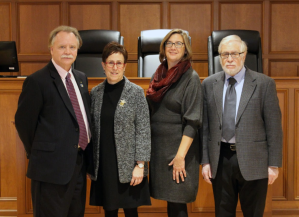
Larry Myer, Joan Bellistri, Laurel Moran, and Joel Fishman (Sara Galligan participated remotely)
I was invited to speak by Joel Fishman, law library director emeritus, along with Sara Galligan of the Ramsey County Law Library in St. Paul, Minnesota, Larry Meyer of the San Bernardino County Law Library and Laurel Moran of the San Diego County Law Library. We tasked with answering the question: do county law libraries have a future? Our answer was, indeed, “YES”, there is a future for the county law library, but not without challenges. County law libraries are facing an increasing need for legal services and legal information and at the same time are experiencing decreased funding and staff. However, there are new opportunities to expand county law library services through partnerships and technology.
Sara and I concentrated on the role of the county law library in access to justice. Sara described how law libraries make a major contribution to access to justice by providing access to legal information on the basic level and the advice of an attorney at the most advanced level. I continued with a discussion of partnerships that aid in the expansion of library programs. Partnerships with the bar, legal service providers or, as in the case of the Allegheny Law Library, a law school, provide the ability for the county law library to be seen as an integral and important component of access to justice.
Larry started with the fact that most county law libraries have insufficient funding and that as result are doing so much more with less. He described libraries as the great equalizers and as such should have stable finding. Larry encouraged looking outside the box by utilizing advocacy and partnerships for support.
Laurel seemed to describe what so many county law libraries are experiencing with decreasing budgets. She described the development of a new acquisition policy emphasizing access rather than collection. Laurel set out a good plan for making it through the transition with tips on balancing the needs of users and access to needed legal information.
The age of Google and smartphones may seem to put all the world’s knowledge at our fingertips, but the reality is that we still need trained professionals to curate all that information, contextualize it and point us toward new sources an algorithm might miss. There is a serendipity in browsing the stacks of a library that the Internet has yet to replicate.
This from a Baltimore Sun editorial published last October that I clipped and saved : The 21st-century library . It included a description of how libraries “are an indispensable font of information and support that enables them to meet life’s everyday challenges” and that “it’s not a stretch for them to see their mandates broadly and to seek to help those who come through their doors however they can.”
Law libraries long thought to be the province of lawyers and judges are now also the spot where anyone in need of legal information or referrals can find what they need to assist in solving legal issues. As a result, public law libraries must find ways to meet the needs of these varied user groups. We are meeting those needs, through existing traditional resources still needed for lawyers and the court; and those resources created for the non-attorney. We are lucky to have the Maryland People’s Law Library available. We have also created FAQ pages available on the library’s Pro Bono and Self-Help Wiki. Librarians provide assistance to the non-attorney, too, by explaining legal research and the traditional sources of law. The law library has increased its digital resources and as a result, provides online assistance to attorneys and non-attorneys alike. The court law library is ever-changing as it adapts to changes in legal information and the users of that information, making it relevant as a 21st century library. The AACPLL is a 21st Century Library:
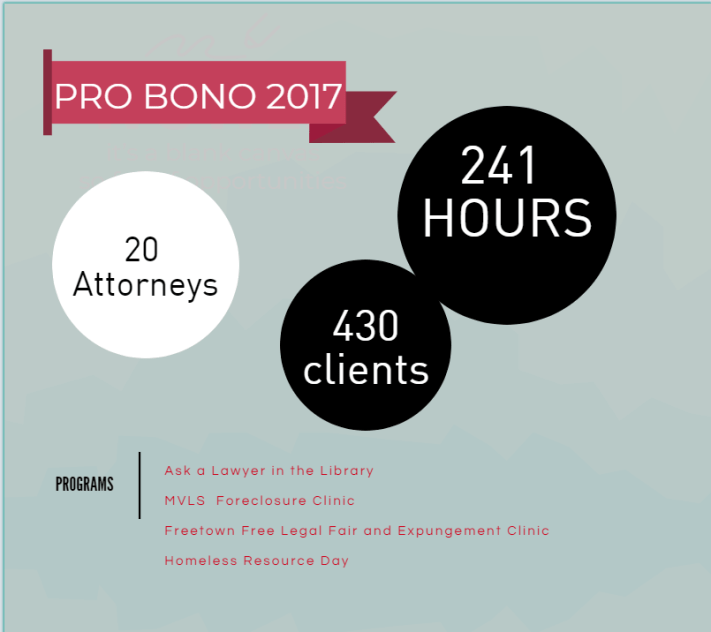
Attorneys provided assistance with issues such as landlord/tenant, wills, power of attorney, judgments, reals estate and contracts.
The Ask a Lawyer In the Library program is a civil, non-family law, self-help program sponsored by The Anne Arundel Bar Association and the Maryland Volunteer Lawyers Service. Every Wednesday, from 11:00 a.m. to 1:00 p.m., you can talk with a volunteer attorney for up to 20 minutes. No appointment is necessary, but sign-up is required at the law library’s information desk. Sign-up begins at 10:45 a.m., and time slots are determined by a lottery. In addition to the weekly program, the Ask A Lawyer In The Library program is held monthly at two Anne Arundel County Public Library branches: Glen Burnie Regional Library on the 3rd Wednesday and Eastport-Annapolis Neck Community Library on the last Tuesday. For more information, please see http://circuitcourt.org/legal-help/lawyer-in-the-library.
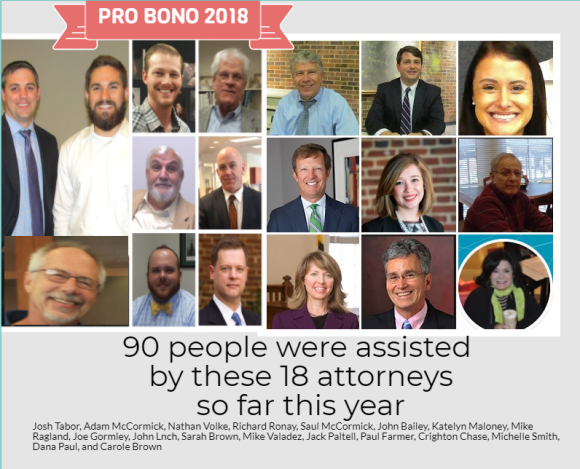
Volunteers were recently honored at the annual Pro Bono Recognition Lunch. Without the attorneys who donate their time these services could not exist. These programs are coordinated by the AACPLL and Local Pro Bono Committee and sponsored by MVLS.
Obviously, this is my favorite part of the interview:
…. It also ties into her history of being a librarian. She’s a human computer, a human catalog.
That’s right—so why does Barbara Gordon need a library science degree?
We wanted to bring that back to her character. She’s historically always been a librarian. This character goes back to the early ‘60s. One of the things that is so cool about librarians is that they’re really involved in their communities. It’s not just that you’re dealing with books and research. You’re also helping out folks who may not have any other resource for computers, how to deal with stuff like taxes, small-business stuff. Libraries are really a community resource. I wanted her to be thinking about other ways she could be helping to build up her community, other than being just a crime fighter.
Couldn’t say it better myself. I might have to start reading Batgirl comics.
 Representing yourself in a civil case or just interested in learning about the law and Maryland courts?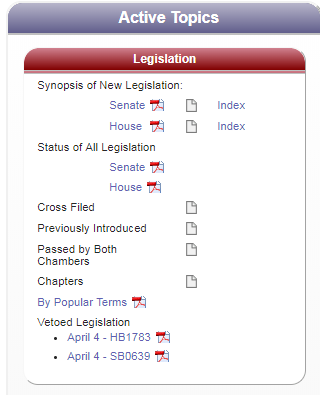


 AACPLL Blog: Law Library News