Categories
lawlibrary Legal Technology

Legal Research in the Blogosphere – VerdictSearch

Legal research can be challenging, even for experienced attorneys; however, there are many resources available to assist both attorneys and non-attorneys with their legal research needs.  The Legal Research in the Blogosphere series will share blog posts and online sites that legal researchers may find useful.

Last week, we featured a post on VerdictSearch, an online database available at the Law Library for patrons to use, free of charge.  (You can read it here.)  If you are interested in a more detailed review of VerdictSearch, specifically its functionality and features, check out the review available on the Law Sites Blog at http://www.lawsitesblog.com/2012/11/verdictsearch-ramps-up-its-look-and-functionality.html.  If you have questions about how to use VerdictSearch, the Law Library is always available to help!

Categories
lawlibrary Pro Bono Self Represented

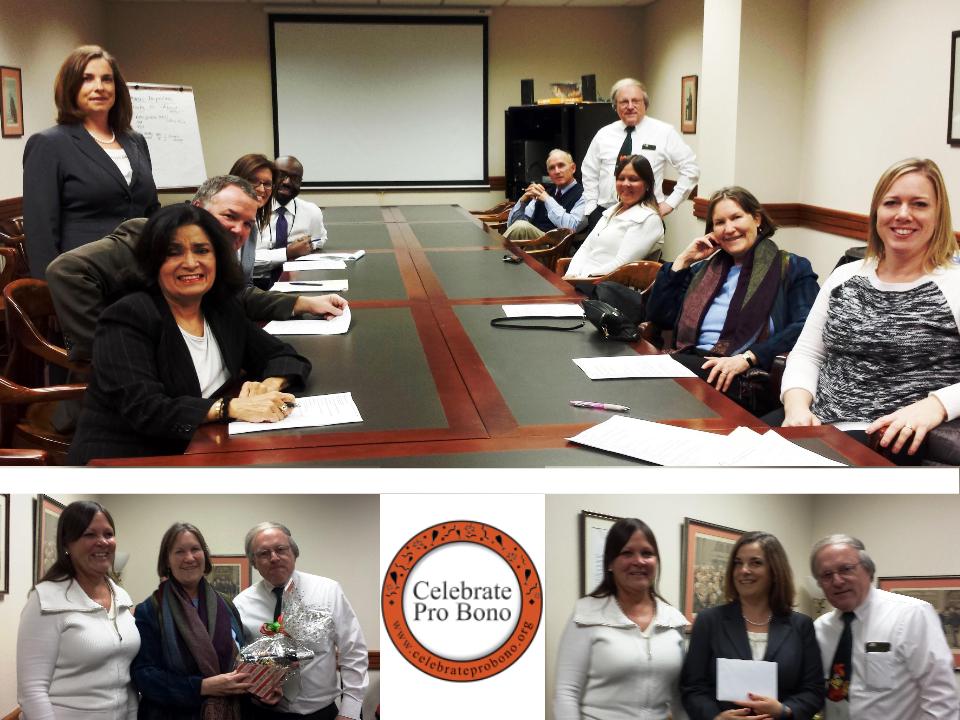
Anne Arundel County Pro Bono Challenge Part I Winners!

Untitled drawing (3)
Thank you for your commitment to pro bono service!

The Law Library participated in the 2014 National Pro Bono Celebration, which was celebrated from October 19, 2014 through October 25, 2014.  This blog featured posts focusing on pro bono and other free legal services throughout the month of October, including the Anne Arundel County Pro Bono Challenge, which we blogged about here and here.  Part I of the Challenge asked attorneys to register with a pro bono legal service and agree to take a case.

The winners of Part I’s Challenge Drawing are Tasnima Apol, Gene Brennan, Carole Brown and Eileen Powers of Blumenthal, Delavan, Powers & Palmer who registered with the Pro Bono Resource Center of Maryland, YWCA Domestic Violence Legal Services, Mid-Shore Pro Bono and the Esperanza Center. Thank you for your commitment to pro bono service!

Stay tuned for Part II of the Anne Arundel County Pro Bono Challenge!

Categories
lawlibrary

The Law Library is closed today.

Untitled drawing (1)

The Law Library is closed today, December 25, 2014, and tomorrow, December 26, 2014, as both days are Court Holidays.  The Law Library will be open on Monday, December 29, 2014.  A list of Court Holidays is available on the Circuit Court’s website at http://www.circuitcourt.org/court-holidays.

Except on Court Holidays, the Library is open Monday through Friday from 9:00 a.m. until 4:30 p.m. We are located on the third floor (main floor) of the Anne Arundel County Circuit Court at 8 Church Circle, Annapolis, Maryland.

If you cannot make it to the library in person, you can always reach us via email at lawlibrary@aacounty.org, via phone at (410) 222-1387 or via fax at (410) 268-9762.

Categories
lawlibrary Pro Bono Self Represented

The Ask a Lawyer in the Library Program is cancelled today.

The Ask a Lawyer in the Library Program is cancelled today, Wednesday, December 24, 2014, and next Wednesday, December 31, 2014.  The program will restart on Wednesday, January 7, 2015.

Categories
lawlibrary Legal Technology

Online Databases in the Limelight – VerdictSearch

Blog PhotoOnline databases can be invaluable, time-saving  tools to any legal researcher as they provide organized access to a wide array of legal resources as well as sophisticated search tools.  Many online databases, including fee-based databases, are available at the Law Library, free of charge, to library patrons.  Each Tuesday of this month, this blog will highlight one of the many databases available at the Law Library.

Are you looking for case valuation assistance?  Then look no further because the Law Library subscribes to VerdictSearch, an online database that assists with verdict and settlement research.  VerdictSearch at the Law Library provides users with access to federal and state cases from Maryland, Virginia and Washington D.C.  Users can search by specific terms as well as by type of injury (e.g., arm, brain, cancer), award (e.g., decision in favor of defendant, settlement, mediated settlement) and case (e.g., appeals, business law, civil practice).  Users can further refine their searches by plaintiff type (e.g., age, gender) and date range.  These searches may assist you with your trial research and strategy development.  VerdictSearch’s document delivery includes printing and email (PDF and Word).

Law Library patrons may use VerdictSearch in the library’s computer room free of charge.  If you have any questions regarding how to use VerdictSearch, please come to the Law Library’s service desk.

For more information about understanding legal research, including the difference between primary and secondary legal resources, check out these research guides.

*Note that VerdictSearch does offer a national database as well as practice area-specific databases.  The Library subscribes only to the Maryland, Virginia and Washington D.C. databases as these jurisdictions are the most relevant for the Law Library’s patrons.
Categories
lawlibrary Pro Bono Self Represented

Ask a Lawyer In the Library: Wednesday Wrap-up

Turtle 3The Ask A Lawyer In The Library program is a civil, non-family law, self-help program sponsored by The Anne Arundel Bar Association and the Maryland Volunteer Lawyers Service.  Every Wednesday, from 11:00 a.m. to 1:00 p.m., you can talk with a volunteer attorney for up to 20 minutes.  No appointment is necessary, but sign-up is required at the law library’s information desk.  Sign-up begins at 10:45 a.m., and time slots are determined by a lottery. For more information, please see http://circuitcourt.org/legal-help/lawyer-in-the-library.

On Wednesday, December 17, 2014,  the Law Library hosted another successful Ask A Lawyer In The Library program.  Thank you, Crighton Chase of Hillman Brown & Darrow, for volunteering and providing this service to the public. Five people took part in the program and were able to speak with the attorney to request assistance with issues regarding leases, wills, estates and real estate.  The next program date is Wednesday, January 7, 2014.

Do you have a criminal law matter?  Criminal Law matters are best addressed by the Office of the Public Defender.  Information about the Office of the Public Defender is available at http://www.opd.state.md.us/.

Are you an attorney interested in volunteering with the Ask A Lawyer In The Library program?  If so, you must be admitted to the Maryland Bar and be in good standing on the Client Security Trust Fund list.  Interested attorneys should contact the law library.

More information about the program is available at http://circuitcourt.org/legal-help/lawyer-in-the-library.  The Ask A Lawyer In The Law Library program is a limited legal advice service.  The program is not a substitute for representation.  If you need an attorney to represent you, you can contact the Anne Arundel Bar Association’s Lawyer Referral and Information Service.
 
Categories
lawlibrary Pro Bono Self Represented

Ask a Lawyer In the Library: Wednesday Wrap-up

Turtle 7The Ask A Lawyer In The Library program is a civil, non-family law, self-help program sponsored by The Anne Arundel Bar Association and the Maryland Volunteer Lawyers Service.  Every Wednesday, from 11:00 a.m. to 1:00 p.m., you can talk with a volunteer attorney for up to 20 minutes.  No appointment is necessary, but sign-up is required at the law library’s information desk.  Sign-up begins at 10:45 a.m., and time slots are determined by a lottery. For more information, please see http://circuitcourt.org/legal-help/lawyer-in-the-library.

 On Wednesday, December 10, 2014,  the Law Library hosted another successful Ask A Lawyer In The Library program. Thank you, Chris Boucher, for volunteering and providing this service to the public. Five people took part in the program and were able to speak with the attorney to request assistance with issues such as trusts, reverse mortgages, transferring an out-of-state case to Maryland and conversion/replevin. The next program date is Wednesday, December 17, 2014.

It is helpful to prepare for your session with the attorney.  Here are some helpful tips:

–  Write a list of specific questions for the attorney.

–  Bring any paperwork and information related to the case.

–  Organize any paperwork from most recent on the top to oldest at the bottom.

–  Identify all deadlines.

–  Prepare a timeline of the legal issue.

If you would like to read up on your issue prior to your session with the attorney, please come find us at the Law Library’s information desk. We are happy to assist you.

More information about the program is available at http://circuitcourt.org/legal-help/lawyer-in-the-library. The Ask A Lawyer In The Law Library program is a limited legal advice service. The program is not a substitute for representation. If you need an attorney to represent you, you can contact the Anne Arundel Bar Association’s Lawyer Referral and Information Service.
 
Categories
lawlibrary Legal Technology

Online Databases in the Limelight – HeinOnline

Computer Room Photo
Access to HeinOnline is available in our computer room.

Online databases can be invaluable, time-saving  tools to any legal researcher as they provide organized access to a wide array of legal resources as well as sophisticated search tools.  Many online databases, including fee-based databases, are available at the Law Library, free of charge, to library patrons.  Each Tuesday of this month, this blog will highlight one of the many databases available at the Law Library.

Last week, this blog published a post about the Westlaw and Lexis databases available at the Law Library. This week, we would like to introduce you to another great database, HeinOnline. HeinOnline is the largest, image-based legal research database with full-text and page images of law review articles, treatises and primary sources of law. HeinOnline users can search for specific resources or browse one of the database’s many collections. For example, you can browse the Law Journal Library collection and see a listing of a specific Law Review’s articles, organized chronologically. Library patrons can access HeinOnline in the library’s computer room.

There is overlap between the resources available on HeinOnline and the resources available on the Westlaw and Lexis. However, there are two big reasons why users may prefer to use HeinOnline over Westlaw and Lexis. First, HeinOnline is an image-based database. This means that users can see page images of documents, including graphics, which match the print versions of the resources. Second, HeinOnline has a greater focus on retrospective historical coverage, meaning that users will be able to find older documents that may be unavailable in the other databases. For example, are you interested in railroad case law from the 1800s?  You can find many cases in HeinOnline’s Early American Case Law collection.

For more information about understanding legal research, including the difference between primary and secondary legal resources, check out these research guides.

Categories
lawlibrary

Legal Research in the Blogosphere – Law Review Commons

Legal research can be challenging, even for experienced attorneys; however, there are many resources available to assist both attorneys and non-attorneys with their legal research needs.  The Legal Research in the Blogosphere series will share blog posts and online sites that legal researchers may find useful.

The Law Review Commons (http://lawreviewcommons.com/) is a free, online collection of law reviews and legal journals.  (A law review is a scholarly journal focused on legal issues, which is most commonly published through a law school or a bar association.)  Users can both search and browse the collection of current and archival content.  Check out the Law Review Commons and let us know what you think!

The Law Sites blog (http://www.lawsitesblog.com/) provides a short review fo the Law Review Commons at http://www.lawsitesblog.com/2014/11/largest-free-collection-law-reviews-web.html.

Categories
Holiday lawlibrary

Today is Repeal Day!

Constitution_of_the_United_States,_page_1Pursuant to the U.S. Constitution, an amendment to the U.S. Constitution may be proposed by Congress (with a two-thirds majority vote in both the Senate and the House of Representatives) or by a constitutional convention called for by two-thirds of the states.  A proposed amendment must then be ratified by three-fourths of the states.

On December 18, 1917, Congress passed the 18th Amendment, which was then ratified by the states on January 16, 1919.  The 18th Amendment established what is commonly referred to as Prohibition, which generally prohibited the manufacture, storage, transportation and sale of intoxicating liquors.  Less than two decades later, on February 20, 1933, Congress passed the 21st Amendment, which repealed the 18th Amendment.  State conventions ratified the 21st Amendment on December 5, 1933.  Utah provided the 36th vote, which was the final vote necessary for ratification.  (Today, a successful amendment to the Constitution would require 38 states to ratify the amendment; however, in 1933, Hawaii and Alaska were not yet states, thus only 36 states were required in order to meet the three-fourths requirement.)  As a result, today, December 5, 2014, is celebrated as Repeal Day.

Are you interested in learning more about the U.S. Constitution and Constitutional Law?  Check out these resources!

– The official transcript of the Constitution of the United States is available through the National Archives website at http://www.archives.gov/exhibits/charters/constitution_transcript.html.

– You can read the full-text of the Constitutional Amendments, including the 18th Amendment and 21st Amendment at http://www.archives.gov/exhibits/charters/constitution_amendments_11-27.html.

– Information about the constitutional amendment process is available at http://www.archives.gov/federal-register/constitution/ and http://www.lexisnexis.com/constitution/amendments_howitsdone.asp.

– If you are interested in learning more about Prohibition, check out http://www.history.com/topics/prohibition.

As always, the Law Library is available to assist you with your research needs.  For example, the Law Library provides users with access to the LexisNexis and Westlaw databases, which include many constitutional law primary and secondary resources.