Categories
lawlibrary Pro Bono Self Represented

National Pro Bono Week: Anne Arundel County

This year for the National Pro Bono Week Celebration, October 21- 27, 2012 the Anne Arundel County Local Pro Bono Committee seeks to encourage pro bono representation by Anne Arundel County attorneys.  The campaign to increase the numbers of pro bono volunteers began with a blast email sent to all members of the AABA. The text of that email follows:

Pro Bono Week News from the Local Pro Bono Committee

The National Pro Bono Celebration focuses the nation’s attention on the increased need for pro bono services during these challenging economic times and celebrates the outstanding work of lawyers who volunteer their services throughout the year. The Anne Arundel County Local Pro Bono Committee is calling on all Anne Arundel attorneys to provide pro bono service. We know the need is great and that more attorneys from our county are needed.

A Word from the Bench:

I represent the Circuit Court on the Anne Arundel County Local Pro Bono Committee.  I am a strong advocate for local attorneys volunteering their time to represent litigants who cannot afford counsel.  In my experience, there is now an even greater need for volunteer lawyers than there has been in the past. I have seen Plaintiffs come into court without any witnesses and state they do not want to call themselves as a witness either.  In that event, there is no evidence.  In some cases, if the Plaintiff, himself, is encouraged to take the stand, the litigant will often just sit there, in the witness box, not saying a word without any knowledge of what his or her burden of production is.  This results in unjust and inequitable results. 

Through my participation in the Pro Bono Committee, I learned that in 2009 Anne Arundel County ranked last in the state in the number of lawyers who provided 50 or more hours of pro bono service.  Anne Arundel has since moved to the twentieth position.  But why not make Anne Arundel County come in first in the number of lawyers who volunteer?  Please consider donating your time and expertise to such a worthy cause.

                                                                        Judge Pamela L. North

 Opportunities:

● The Anne Arundel County Local Pro Bono Committee has partnered with the Maryland Volunteer Lawyers Service (MVLS) for the placement of  Anne Arundel County residents in need of pro bono representation. The Maryland Volunteer Lawyers Service reports that many cases needing representation in Anne Arundel county are taken by attorneys from other counties.  It is easy to add your name to the MVLS roster. Just visit the volunteer page on the MVLS website and simply fill out the online form. MVLS supports its volunteers with malpractice insurance, mentors, free training, use of their offices to meet with clients and reimbursement of out-of-pocket expenses.

● The Foreclosure crisis continues to affect our state with Anne Arundel County ranking fifth in the state in the number of foreclosures. The Foreclosure Prevention Pro Bono Project needs volunteer attorneys to help. Volunteers receive free training and are asked to provide two homeowners pro bono representation in their foreclosure cases and/or provide pro bono representation to one homeowner and volunteer at one foreclosure solutions workshop where homeowners receive free legal advice.  The Project provides access to malpractice insurance and mentoring support.

Anne Arundel County Attorneys are invited to attend the newly developed program on Foreclosure Mediation on November 2.  Since the basic training is a prerequisite you will be asked to view the webcast of the basic program for background. Your invitation follows:

Pro Bono Resource Center and Civil Justice are pleased to offer the below pro bono training program, A Practical Guide for Representing Homeowners at Foreclosure Mediation, as part of Maryland’s Foreclosure Prevention Pro Bono Project.  Since the Maryland foreclosure mediation program took effect in July 2010, we have learned a lot about how to achieve positive outcomes through mediation and we want to share our tips and strategies with you.  This training program is designed for existing Project volunteers who have already taken the Project’s basic training course.  If you have not yet taken the basic training course, please contact Annie Brinkmann of Pro Bono Resource Center to gain access to the webcast of the basic course (443-703-3050 or abrinkmann@probonomd.org).

Friday, November 2, 2012, 9:00 AM – 1:00 PM 

University of Maryland Francis King Carey School of Law – ROOM 205

500 W. Baltimore Street

Baltimore, MD 21201-1786 

  To register, please visit www.probonomd.org/foreclosure-prevention-training

 Questions?  Please contact Annie Brinkmann at 443-703-3050 or abrinkmann@probonomd.org.   

 If you are interested in participating but cannot attend on November 2, please complete the registration process indicating that you would like to receive the webcast of this training once it becomes available.

● For those who prefer to donate to a worthy organization, the local committee suggests that donations be made to the Anne Arundel Legal Aid Bureau through AAcares.org.

Celebrate Pro Bono Week:

You can find out more about pro bono opportunities for Anne Arundel attorneys at the AACPLL Self Help and Pro Bono WIKI.  Posters of Anne Arundel Pro Bono Volunteers will be on display in the Anne Arundel County Public Law Library during Pro Bono Week.  Visit the library to see what other Anne Arundel attorneys have done to volunteer and to add your name to the roster of those “doing good.” (There will be chocolate.)

Please make the Local Pro Bono Committee’s campaign to increase pro bono service a success as we celebrate Pro Bono week this year Volunteer now!
Categories
lawlibrary Maryland Law Self Represented

Self Help Guide for the Maryland Court of Appeals

The Maryland Court of Special Appeals has published “A Guide for Self-Representation: Maryland Court of Special Appeals.”  The library has added copies as part of the library collection (KFM1755.G85 2012) and has copies available for distribution.  The manual is also available online: http://mdcourts.gov/cosappeals/pdfs/cosaguideselfrepresentation.pdf

Categories
lawlibrary Maryland Law

Kinship Care Resources

“Informal kinship care” means a living arrangement in which a relative of a child, who is not in the care, custody, or guardianship of the local department of social services, provides for the care and custody of the child due to a serious family hardship. (Md. EDUCATION Code Ann. §4-122.1 and Md. HEALTH GENERAL Code Ann.  §20-105)

A new page on the topic of  kinship care has been added to the AACPLL Self Help and Pro Bono WIKI .  Here you will find links to Maryland code sections and COMAR as well as information provided by various agencies.  The forms and information sheet handout available in the Anne Arundel County Family Self Help Center are also included.

Categories
lawlibrary Pro Bono Self Represented

Anne Arundel County Pro Bono Attorney Luncheon

A luncheon was held earlier this month to thank the Anne Arundel County attorneys who volunteer for the Ask a Lawyer programs held in the Anne Arundel County Public Law Library, the North County Area Public Library and for the annual Anne Arundel County Homeless Resource Day.

The luncheon catered by the Main Ingredient was sponsored by the Anne Arundel County Local Pro Bono Committee and provided by the Anne Arundel Bar Association and the Anne Arundel County Circuit Court. Volunteer attorneys were honored by Anne Arundel County Administrative Judge Nancy-Davis Loomis and Hon. Clayton Greene of the Court of Appeals.

With this being  the time of year when attorneys are required to report their pro bono hours to the Maryland Court of Appeals, some program statistics for 2011 are in order.  There were 44 attorneys who provided 201 hours of service to 479 clients through the Ask a Lawyer Programs.  Volunteer attorneys received certificates to thank them for their services and to act as a record of their program hours.

This slideshow requires JavaScript.

Categories
Self Represented

Judges and the Self Represented

A recent post in Richard Zorza’s Access to Justice Blog provides links to his recent articles in the Judges Journal concerning judges and the self represented.  He invites comments and discussion.

The first article published in the Fall 2011 issue (Vol. 50, No. 4) of the Judges Journal is entitled “A New Day for Judges and the Self-Represented: The Implications of Turner v. Rogers  This article deals with less complex issues faced by judges in the courtroom  with the self represented.

Richard Zorza’s second article has just been published in the Winter 2012 issue of the Judges Journal (Vol. 51, No. 1): A New Day for Judges and the Self-Represented: Toward Best Practices in Complex Self-Represented Cases“.

He states that “the new article includes discussion of how judges can handle cases with an attorney on one side, cases with angry or mentally disturbed litigants, as well as complex and jury trials.”

Richard Zorza is the coordinator of the national Self Represented Litigation Network at  www.selfhelpsupport.org.

Categories
lawlibrary Legal Technology

Maryland District Court Self Help Center Offers Remote Access

The Maryland Judiciary’s recent press release announced that the Maryland District Court Self Help Center now offers remote access via Live Chat and  phone.  Until now, the Center’s services were limited to walk-ins only at the Glen Burnie District Court at 7500 Ritchie Highway.  It was great for us that the first and only District Court Self Help center was located in Anne Arundel County.  The law library has been making referrals to the center since it opened two years ago.  However, the location sometimes proved a problem for some of those we referred there.  Already we were able to refer a caller from Virginia to the Live Chat for assistance with a Maryland District Court case. The phone service will make it even easier.  Based on the many phone calls we get related to the district court such as landlord/tenant, debt collections ans small claims I  know that this service is needed and will be appreciated.

Online, live-chat and phone:
Phone 410-260-1392
www.mdcourts.gov/district/selfhelpcenter/home.html
Hours: 8:30 a.m.-noon, 12:30-4:30 p.m.

Walk-in:
Glen Burnie District Court
7500 Ritchie Highway, Room 206
Glen Burnie, MD 21061
Hours: 8:30 a.m.-noon, 12:30-4:30 p.m.

Categories
lawlibrary Legal Technology

E-filing and the Self Represented Litigant

As the Maryland judiciary moves to institute e-filing, the question of how it might affect the self-represented litigant (SRL) is being considered.  The following references could help in that discussion:

Eight Rules of E-Filing: Rule #6 – E-Filing Must Support the Self Represented
http://courttechbulletin.blogspot.com/2011/09/eight-rules-of-e-filing-rule-6.htm

E-Filing Assistance for the Self-Represented: Seattle Law Library Shows the Way
Posted on July 21, 2011 by richardzorza
http://accesstojustice.net/2011/07/21/e-filing-assistance-for-the-self-represented-seattle-law-library-shows-the-way/

National Center for State Courts – Self Representation Resource Guide has a “Technology” section
http://www.ncsc.org/topics/access-and-fairness/self-representation/resource-guide.aspx

Older but could still provide appropriate analysis:

The Future of Self-Represented Litigation: Report From the March 2005 Summit (The Role of Technology in the Access Solution, p.81)
http://www.selfhelpsupport.org/search/download.68690

Self-Represented Litigants and Electronic Filing by Ronald W. Staudt (from the 2003 CTC conference)
http://www.ncsconline.org/d_tech/ctc/showarticle.asp?id=68

Washington State Access to Justice Technology Principles
http://www.courts.wa.gov/court_rules/?fa=court_rules.display&group=am&set=ATJ&ruleid=amatj02principles

Categories
lawlibrary

Family Self Help Center has moved to the Law Library

Today was the first day that the Family Law Self Help Center operated as part of the law library.  The actual move took place on Friday.  The Center assisted 32 people today with the majority arriving before noon.  This made for an interesting, no time to think about it,  adjustment.  We will be working out the logistics as time goes on.

The library and the center have always cross referred. It could be difficult for the clients who would have to trek back and forth between the second and third floors.  Now all of the self help resources are in one spot making it easier for the center and library to collaborate.

The hours of the Family Law Self Help Center will remain the same:

Monday 9:00 a.m. – 4:30 p.m.
Tuesday 9:00 a.m. – 1:00 p.m.
Wednesday 9:00 a.m. – 4:30 p.m.
Thursday 9:00 a.m. – 4:30 p.m.
Friday 9:00 a.m. – 1:00 p.m.
Categories
lawlibrary

Anne Arundel County Homeless Resource Day 2011

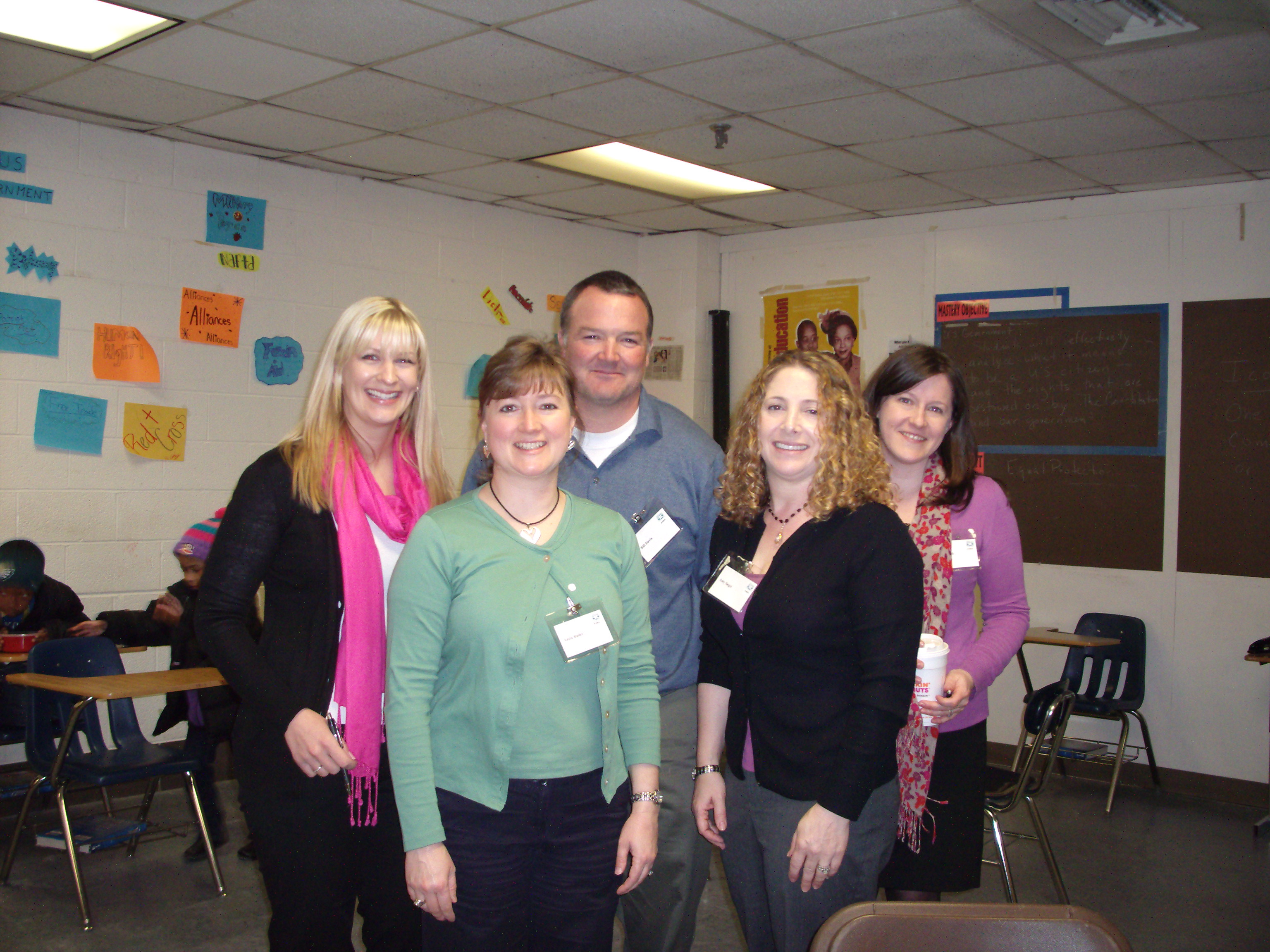
Homeless Day Volunteers: Anita Bailey, Amy Siegel, Lonni Summers, Bill Davis and Sarah Frush

Anne Arundel County Attorneys provided free legal advice to 70 people at this year’s Homeless Resource Day.  More people than ever took advantage of the 4th Annual Anne Arundel County Homeless Resource Day on Saturday, March 26, 20011.  For the first time ever, there were lines for services. 400 participants were reported in 2010 and more than 500 were counted this year.  The event was held at Glen Burnie High School from 8:30 a.m. until 4:00 p.m.  which is two hours more than last year.  In addition to legal services, participants received medical and dental care, could get a haircut, and meet with many benefit provider agencies.  The MVA was on site to provide IDs and vital statistics was there to provide birth certificates.

The wide range of expertise of the volunteer attorneys was essential to address the varied needs of those seeking legal advice.  Bill Davis, Public Defender and Anne Leitess, Assistant State’s Attorney were able to answer the many questions about criminal records and expungement.  Family law attorney Kari Fawcett and Anita Bailey, head of Anne Arundel County Legal Aid, were kept busy with the many family law questions.  Legal services benefited from the presence  of other Legal Aid attorneys Amy Siegel and Margaret Leonard who deal with the many issues facing the homeless every day.  The Legal Aid attorneys who staff the Glen Burnie Self Help Center, Sarah Frush and Lonni Summers, were also able to draw from their center experience to help the homeless.

45 people were served last year.  This year, 45 people had been served by 11:00 a.m.  By the end of the day, 70 people received free legal advice.  Like last year, the morning was the busiest time.  Many seeking legal advice had questions that involved multiple legal issues.  The number one question, again,  involved criminal records and expungement.  There were just about as many family law questions.  Problems concerning housing and denial of benefits were a close second.  Other issues included employment, foreclosure, wills and personal injury.  (See Homeless Resource Day 2011: Statistics for more detail.)

MVLS, The Maryland Volunteer Lawyer Service partnered with the AABA this year.  One of the benefits of this partnership was access to the MVLS umbrella malpractice insurance.

Next year we hope to have more attorneys with expertise in the area of family and criminal law.  It will be helpful to create an expungement information packet for all of the volunteers so that they all would be comfortable advising on this issue.  We are already looking for attorneys to help with the benefits questions.

DSS has asked in the past about the possibility of offering court services at Homeless Day.  We will investigate how services such as disposing of outstanding warrants, filing of fee waivers and/or petitions might be offered.

The number of questions asked and the number of people receiving assistance shows what a valuable service this is.   The work and time donated by all of the attorney volunteers was more than appreciated by all served.

AABA President, John Gardner with Joan Bellistri, Coordinator and Anne Leitess, volunteer.
Categories
lawlibrary

Maryland Access to Justice Commission 2010 Annual Report

The Maryland Access to Justice Commission has issued its 2010 Annual Report.  The report outlines the work of the commission over the last year.  The mission of the Access to Justice Commission is to give “… meaningful voice to the public whose interest it serves…” and to …”develop, consolidate, coordinate and/or implement initiatives designed to, and enhance the quality of civil justice for persons who encounter barriers in gaining access to Maryland’s civil justice system.”  The activities, projects and programs described in the 2010 Annual Report are evidence of this mission.

Highlights of the report include the information gained from a series of  “Listening Events” held across the state so that stakeholder organizations, their clients and the public could voice their concerns and experiences with Maryland courts.  Through the work of various committees the commission was able to adopt a definition of “access to justice”  and investigate and advocate for the access and delivery of legal services in areas such as the funding of legal service organizations.  A report, Implementing a Civil Right to Justice, was published by the Commission. The needs of the self-represented were addressed in the assistance in the creation of the District Court Self Help Center and the promotion of limited scope representation, or unbundling, by drafting rules and forms that have been presented to the Rules Committee of the Court of Appeals. The public education committee developed a series of posters that can be ordered without charge at the Access to Justice website and viewed in the Appendix of the Annual Report.  Other issues studied were language barriers and how the needs of those who do not speak English might be met.  Most recently the Commission created a number of awards that would promote access to justice activities.

I have mentioned just some examples of the work of the Commission illustrated in the Annual Report.   I recommend that anyone with an interest in the equitable provision of legal services read the entire report and the appendices to find a wealth of information on access to justice in Maryland.