Categories
lawlibrary Pro Bono Self Represented

Ask a Lawyer In the Library: Wednesday Wrap-up

Valadez
Thank you Mike!

The Ask A Lawyer In The Library program is a civil, non-family law, self-help program sponsored by The Anne Arundel Bar Association and the Maryland Volunteer Lawyers Service. Every Wednesday, from 11:00 a.m. to 1:00 p.m., you can talk with a volunteer attorney for up to 20 minutes. No appointment is necessary, but sign-up is required at the law library’s information desk. Sign-up begins at 10:45 a.m., and time slots are determined by a lottery. For more information, please see http://circuitcourt.org/legal-help/lawyer-in-the-library.

On Wednesday, July 8, 2015, the Law Library hosted another successful Ask A Lawyer In The Library program. Thank you, Mike Valadez, for volunteering and providing this service to the public. Seven people took part in the program and were able to speak with the attorney to request assistance with issues regarding landlord/tenant questions, tax redemption, business licenses, property recovery, contracts, small claims and expert witnesses. The next program date is Wednesday, July 15, 2015.

Do you have a criminal law matter? Criminal Law matters are best addressed by the Office of the Public Defender. Information about the Office of the Public Defender is available at http://www.opd.state.md.us/.

More information about the program is available at http://circuitcourt.org/legal-help/lawyer-in-the-library. The Ask A Lawyer In The Law Library program is a limited legal advice service. The program is not a substitute for representation. If you need an attorney to represent you, you can contact the Anne Arundel Bar Association’s Lawyer Referral and Information Service.
 
Categories
lawlibrary Maryland Law

Law Day – Statutes

In connection with the Law Library’s celebration of Law Day, we will be publishing a series of eight posts that focus on the basics of the Maryland court system and legal research.

Statutes are the laws passed by legislative bodies and probably what most people visualize when they think about the law. Statutes are generally organized by subject in a set called a “code”. For example, you would generally find statutes about divorce laws in Maryland under the Family Law Article (subject) in the Code of Maryland (code). Don’t forget, statutes are only one of the three main sources of primary law (statutes, regulations and case law), and your legal research may not be complete if you only focus on relevant statutes.

Federal Statutes. The U.S. Congress is the U.S. federal government’s legislative body and derives its power to make laws from the United States Constitution. The U.S. Congress consists of two chambers: the House of Representatives and the Senate. Members of Congress are directly elected by citizens of the United States. To learn more about the federal legislative process, check out this article, “How Our Laws Are Made”, available on Congress.gov.

Current U.S. statutes are organized by subject matter in the current U.S. Code, which is available online here. In addition, check out our earlier blog post here about Congress.gov, the official federal website for federal legislative information. Congress.gov is a great resources that provides members of the public with access to current and historic legislative information, including bill status, bill summaries and committee reports.

The Law Library’s print collection includes the West’s United States Code Annotated. (The annotations included in the print books by the editors include references to relevant cases, law review articles and other resources that may provide the legal researcher with useful research and related primary sources.) You can also read the annotated code in electronic format through the Law Library’s subscriptions to WestlawNext and LexisNexis.

Maryland Statutes. Maryland’s legislative body is the Maryland General Assembly, which is comprised of two chambers: the State Senate and the House of Delegates. The Maryland General Assembly meets for 90 calendar days each year, beginning on the second Wednesday of January, and special sessions may be called by the Governor or a petition by a majority of each house. More information about the Maryland legislative process is available here. Current Maryland statutes are organized by article (subject) in the Code of Maryland and available online here.

The Law Library’s print collection includes current and superseded copies of Michie’s Annotated Code of Maryland West’s Annotated Code of Maryland. (The annotations included in the print books by the editors include references to relevant cases, law review articles and other resources that may provide the legal researcher with useful research and related primary sources.) In addition, you can read the current annotated code in electronic format through the Law Library’s subscriptions to WestlawNext and LexisNexis.

Local Ordinances and Resolutions. Don’t forget local ordinances and resolutions! For example, if you live in Annapolis, your legal statutory research may need to include the Anne Arundel County Code as well as the Code of the City of Annapolis.

The legislative body for Anne Arundel County is the County Council, whose members are elected. The Anne Arundel County Council generally holds legislative session on the first and third Mondays of each month (excluding August) in Annapolis, Maryland and all sessions are open to the public. For more information, check out the County Council’s website. For those you who cannot attend the sessions in person, you may be able to view live webcasts.

The Annapolis City Council is the legislative body for the city of Annapolis, and its members include the Mayor of Annapolis and eight Aldermen and Alderwomen. Information regarding the City Council’s regular meetings, public access to agendas and television schedules are available here.

The Law Library’s print collection includes current and superseded copies of the Anne Arundel County Code and the Code of the City of Annapolis. In addition, the Law Library’s collection includes copies of the Anne Arundel County Council’s Proposed Bills, Final Bills, Resolutions and Schedules.

Stay tuned for the next post in our Law Day Series, which will provide an overview of the Maryland Office of Administrative Hearings.

Categories
lawlibrary

Local News – West Street Mural

FullSizeRenderDowntown Annapolis has been buzzing about the new mural on the wall at Tsunami Restaurant on West Street, painted by Jeff Huntington. For news coverage, check out the Capital Gazette, which has published several news articles on the mural.

The articles make references to the Historic Preservation Commission and the Annapolis Department of Planning and Zoning, and the websites for the Historical Preservation Commission and the Annapolis Department of Planning and Zoning provide a wealth of useful information, links and documents. Statutory authority for the Historic Preservation Commission and the Annapolis Department of Planning and Zoning derive from the Charter and the Code of the City of Annapolis.  The current Charter and Code are available online. The Law Library’s collection includes the current Charter and Code as well as superseded Charters and Codes of the City of Annapolis. If you are interested in learning more about the Charter and the Code of the City of Annapolis, please contact the Law Library!

Categories
lawlibrary

Cameras in the Courtroom?

Don’t make the same mistake as this person here. Are cameras allowed in the Circuit Court’s courtrooms? No, unless it falls within an exception. For more information about cameras and other electronic devices, check out the Circuit Court’s website. You will see that the Maryland Rules are referenced on the Circuit Court’s website. You can read the Maryland Rules online here, or come into the Law Library to read print copies.

If you are interested in watching or listening to court proceedings, available options include webcasts and audio recordings. Check them out!

Contact the Law Library regarding information about how to access recordings of your court proceedings.

Categories
Holiday lawlibrary

Happy Fourth of July!

Today is Independence Day, which commemorates the adoption of the Declaration of Independence on July 4, 1776. A federal holiday since 1941, Independence Day, also referred to as the Fourth of July, has been celebrated in the United States since 1776.  If you are interested in learning more about Independence Day and the events leading up to the adoption of the Declaration of Independence, check out these sites.

Categories
Holiday lawlibrary

Court Holiday

The Law Library is closed Friday, July 3, 2015, as today is a Court Holiday.  The Law Library will reopen on Monday, July 6, 2015.  A list of Court Holidays is available on the Circuit Court’s website at http://www.circuitcourt.org/court-holidays.

Except on Court Holidays, the Law Library is open Monday through Friday from 9:00 a.m. to 4:30 p.m. We are located on the third floor (main floor) of the Anne Arundel County Circuit Court at 8 Church Circle, Annapolis, Maryland. If you cannot make it to the library in person, you can always reach us via email at lawlibrary@aacounty.org, via phone at (410) 222-1387 or via fax at (410) 268-9762.

Categories
lawlibrary Pro Bono Self Represented

Ask a Lawyer In the Library: Wednesday Wrap-up

poster-ragland
Thank you Mike!

The Ask A Lawyer In The Library program is a civil, non-family law, self-help program sponsored by The Anne Arundel Bar Association and the Maryland Volunteer Lawyers Service. Every Wednesday, from 11:00 a.m. to 1:00 p.m., you can talk with a volunteer attorney for up to 20 minutes. No appointment is necessary, but sign-up is required at the law library’s information desk. Sign-up begins at 10:45 a.m., and time slots are determined by a lottery. For more information, please see http://circuitcourt.org/legal-help/lawyer-in-the-library.

On Wednesday, July 1, 2015, the Law Library hosted another successful Ask A Lawyer In The Library program. Thank you, Mike Ragland, for volunteering and providing this service to the public. Six people took part in the program and were able to speak with the attorney to request assistance with issues regarding property, FOIA requests, landlord/tenant issues and estates. The next program date is Wednesday, July 8, 2015.

Do you have a criminal law matter? Criminal Law matters are best addressed by the Office of the Public Defender. Information about the Office of the Public Defender is available at http://www.opd.state.md.us/.

More information about the program is available at http://circuitcourt.org/legal-help/lawyer-in-the-library. The Ask A Lawyer In The Law Library program is a limited legal advice service. The program is not a substitute for representation. If you need an attorney to represent you, you can contact the Anne Arundel Bar Association’s Lawyer Referral and Information Service.
 
Categories
lawlibrary

Revised Court Cost Schedule Goes Into Effect Today!

Starting today, the cost to file proceedings in Maryland has increased. Check out the new Court Fee Schedule and Court Fee Summary Chart. Additional information is available here.

Categories
lawlibrary

Unreported Opinions

In April, Maryland Court of Appeals Chief Judge Mary Ellen Barbera announced that previously unreported opinions would be available on the Maryland Court’s website in order to increase free, online access to opinions. Reported Opinions of the Maryland Court of Appeals and the Maryland Court of Special Appeals, from 1995 to the present, are available on the Maryland Court’s website here.

However, do not forget Maryland Rule 1-104!

RULE 1-104. UNREPORTED OPINIONS

(a) Not Authority. An unreported opinion of the Court of Appeals or Court of Special Appeals is neither precedent within the rule of stare decisis nor persuasive authority.

(b) Citation. An unreported opinion of either Court may be cited in either Court for any purpose other than as precedent within the rule of stare decisis or as persuasive authority. In any other court, an unreported opinion of either Court may be cited only (1) when relevant under the doctrine of the law of the case, res judicata, or collateral estoppel, (2) in a criminal action or related proceeding involving the same defendant, or (3) in a disciplinary action involving the same respondent. A party who cites an unreported opinion shall attach a copy of it to the pleading, brief, or paper in which it is cited.

Also, it may be hard to believe, but reading opinions can be fun. Check out this The Daily Record article, which provides examples of some humorous opinions from the Maryland Court of Appeals.

To learn more about opinions, check out our blog post here!

Categories
lawlibrary

Law Day Series – What is an opinion?

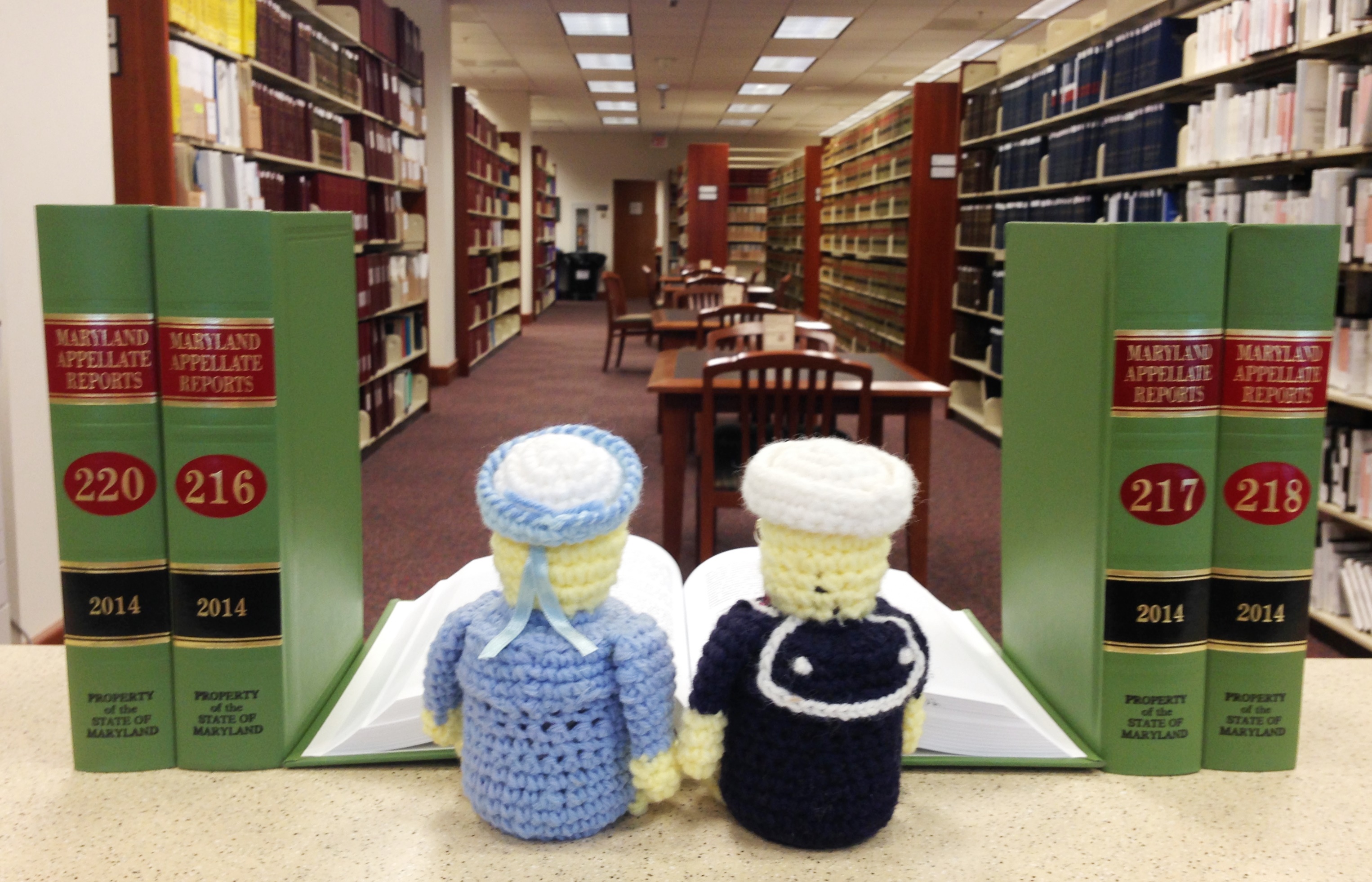
IMG_1417In connection with the Law Library’s celebration of Law Day, we will be publishing a series of eight posts that focus on the basics of the Maryland court system and legal research.

In legal research, an opinion is not just a judge’s personal view or attitude about a matter. Instead, it is a formal, potentially binding, detailed explanation. The opinion provides an explanation of and justification for a judge’s or judicial panel’s decision that generally includes a summary of the relevant facts in a case, a statement of the legal issue or issues, the court’s decision (often referred to as the “ruling” or “holding”) and a discussion of the judge’s reasoning or rationale. These opinions make up case law (also referred to as “common law”).

Opinions matter because they can be a potentially binding, primary source of law (referred to as “precedent”) for a future court case. It’s important to realize that an opinion is only potentially binding, because there are a lot of factors that must be considered to determine whether the opinion applies to a current situation. Factors such as different facts, subsequent changes to the law and the jurisdiction of the courts involved will impact whether a previous case can be used as precedent. Check out this article from the Maryland People’s Law Library that provides an overview on whether you can rely on case law.

There are several research paths to identify relevant case law. Check out this article from the Maryland People’s Law Library regarding how to find case law by subject.

Many of the resources listed in that article, such as digests (subject index to cases), annotated statutes (e.g., Michie’s Annotated Code of Maryland), encyclopedias (e.g., West’s Maryland Law Encyclopedia) and treatises are available in the Law Library in both print and electronic forms. In addition, you can search for case law through the Law Library’s subscriptions to online legal databases such as WestlawNext and LexisNexis.

Once you have identified cases that you would like to read, you can find case law in print and electronic formats. In print, the cases are published in serials called reporters, which publish the cases in approximate chronological order.

The Law Library’s print collection includes Maryland Reports (cases from Maryland Court of Appeals) and Maryland Appellate Reports (cases from the Maryland Court of Special Appeals) as well as federal and regional reports. You can read the cases in electronic format through the Law Library’s subscriptions to WestlawNext and LexisNexis. These subscriptions include document delivery services, so you can print or email the cases.

Once you have found relevant cases, you must check to make sure they are still considered “good law” through citators, which are services that check citations of a decided case to determine whether they have been supported, overruled or distinguished.

The Law Library provides access to online citators through WestlawNext (KeyCite) and LexisNexis (Shepard’s Citations), so please come by the service desk to learn more about online citators.

Stay tuned for the next post in our Law Day Series, which will provide an overview of statutes in Maryland.