Categories
lawlibrary Legal Technology

Online Databases in the Limelight – LexisNexis*

IMG_1894
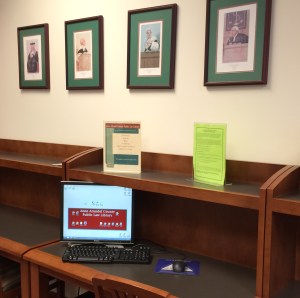
Here is one of the computers in the Law Library with access to LexisNexis.

Online databases can be invaluable, time-saving  tools to any legal researcher as they provide organized access to a wide array of legal resources as well as sophisticated search tools.  Many online databases, including fee-based databases, are available at the Law Library, free of charge, to library patrons.  This month, the blog will feature six of the online databases available at the Law Library.

Lexis is one of the biggest players in the world of legal publishing and online legal research.  Lexis offers LexisNexis, a platform for searchable databases with access to a wide array of primary resources, such as federal and state statutes, federal and state regulations and case law, as well as secondary resources, such as encyclopedias, treatises, journal articles and form books.*  

There is a myriad of tools, resources and services available through Lexis.  Some of the most popular secondary Maryland resources available through our LexisNexis subscription are Pleading Causes of Action in Maryland  and MICPEL’s Marital Settlement Agreement Form. In addition, LexisNexis provides Shepard’s Case Citations, which identifies all published cases and other sources that cite (e.g., refer to) the case being reviewed by the legal researcher and provides additional information, such as the reason why the later case cited the case at hand.  This is important information to have as later cases can affect the value of the case at hand or later cases may better address the matter being researched.  In addition, the Law Library’s subscription includes document delivery services (e.g., email, print, PDF downloads, RTF downloads) so that users can access certain resources after the online session has concluded.

Can I access LexisNexis at the Library? Yes! The Law Library offers FREE, in-person access to LexisNexis. As access to LexisNexis can be cost-prohibitive to attorneys and self-represented litigants, the Law Library provides free access to meet its users’ legal research needs.

How to use LexisNexis in the Library? There are three computers designated for public LexisNexis access in the law library. Each computer has a small sign indicating the availability of LexisNexis. You do not need log-in information — simply double-click on the LexisNexis icon on the computer’s desktop.

What to do if you need help with LexisNexis? Please ask for help at the Law Library’s service desk. We can provide technical assistance (e.g.,  how to get started, how to use and search the database) as well as research assistance (e.g.,  how best to formulate your search, which resources to target for more refined searches).

Can I access the Law Library’s LexisNexis subscription from home? No. The Law Library’s current subscription permits in-person use at the library only.

*This blog post is an update of a blog post previously published on December 2, 2014.

**For more information about understanding legal research, including the difference between primary and secondary legal resources, check out these research guides.
Categories
lawlibrary Legal Technology

Online Databases in the Limelight – WestlawNext*

IMG_1889
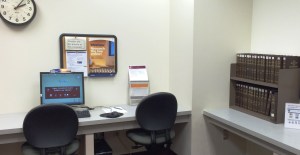
Here’s a snapshot of one of the computers in our computer room with WestlawNext access.

Online databases can be invaluable, time-saving  tools to any legal researcher as they provide organized access to a wide array of legal resources as well as sophisticated search tools.  Many online databases, including fee-based databases, are available at the Law Library, free of charge, to library patrons.  This month, the blog will feature six of the online databases available at the Law Library.

Thomson Reuters is one of the biggest players in the world of legal publishing and online legal research and is the publisher of WestlawNext, a platform for searchable databases with access to a wide array of primary resources, such as federal and state statutes, federal and state regulations and case law, as well as secondary resources, such as encyclopedias, treatises, journal articles and form books.**

There is a myriad of tools, resources and services available through both WestlawNext.  One of the most popular services provided through WestlawNext is KeyCite, which is an online case citator service. KeyCite identifies all published cases and other sources that cite (e.g., refer to) the case being reviewed by the legal researcher and provide additional information, such as the reason why the later case cited the case at hand.  This is important information to have as later cases can affect the value of the case at hand or later cases may better address the matter being researched.  In addition, document delivery services (e.g., email, print, PDF downloads, RTF downloads) are available through the Law Library’s WestlawNext subscription. This means that users can access certain resources after the online session has concluded.

Can I access WestlawNext at the Library? Yes! The Law Library offers FREE, in-person access to WestlawNext. As access to WestlawNext can be cost-prohibitive to attorneys and self-represented litigants, the Law Library provides free access to meet its users’ legal research needs.

How to use WestlawNext in the Library? There are two computers designated for public WestlawNext access in the law library. Each computer has a small sign indicating the availability of WestlawNext. You do not need log-in information — simply double-click on the WestlawNext icon on the computer’s desktop.

What to do if you need help with WestlawNext? Please ask for help at the Law Library’s service desk. We can provide technical assistance (e.g.,  how to get started, how to use and search the database) as well as research assistance (e.g.,  how best to formulate your search, which resources to target for more refined searches).

Can I access the Law Library’s WestlawNext subscription from home? No. The Law Library’s current subscription permits in-person use at the library only.

*This blog post is an update of a blog post previously published on December 2, 2014.

**For more information about understanding legal research, including the difference between primary and secondary legal resources, check out these research guides.

Categories
lawlibrary Pro Bono Self Represented

Ask a Lawyer In the Library: Wednesday Wrap-up

photo 1 (3)
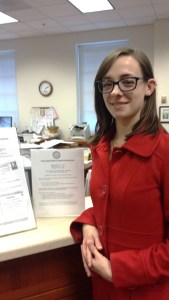
Thank you, Chris!

The Ask A Lawyer In The Library program is a civil, non-family law, self-help program sponsored by The Anne Arundel Bar Association and the Maryland Volunteer Lawyers Service. Every Wednesday, from 11:00 a.m. to 1:00 p.m., you can talk with a volunteer attorney for up to 20 minutes. No appointment is necessary, but sign-up is required at the law library’s information desk. Sign-up begins at 10:45 a.m., and time slots are determined by a lottery. For more information, please see http://circuitcourt.org/legal-help/lawyer-in-the-library.

On Wednesday, December 9, 2015, the Law Library hosted another successful Ask A Lawyer In The Library program. Thank you Chris Boucher for volunteering and providing this service to the public. Four people were able to meet with the attorney to discuss issues related to foreclosure, contracts, wills and injunctions.

It is helpful to prepare for your session with the attorney.  Here are some helpful tips:

  • Write a list of specific questions for the attorney.
  • Bring any paperwork and information related to the case.
  • Organize any paperwork from most recent on the top to oldest at the bottom.
  • Identify all deadlines.
  • Prepare a timeline of the legal issue.

If you would like to research your issue prior to your session with the attorney, please come find us at the Law Library’s information desk.  We are happy to assist you.

More information about the program is available at http://circuitcourt.org/legal-help/lawyer-in-the-library. The Ask A Lawyer In The Law Library program is a limited legal advice service. The program is not a substitute for representation. If you need an attorney to represent you, you can contact the Anne Arundel Bar Association’s Lawyer Referral and Information Service.

Categories
lawlibrary Pro Bono Self Represented

Ask a Lawyer In the Library: Wednesday Wrap-up

Mike Ragland
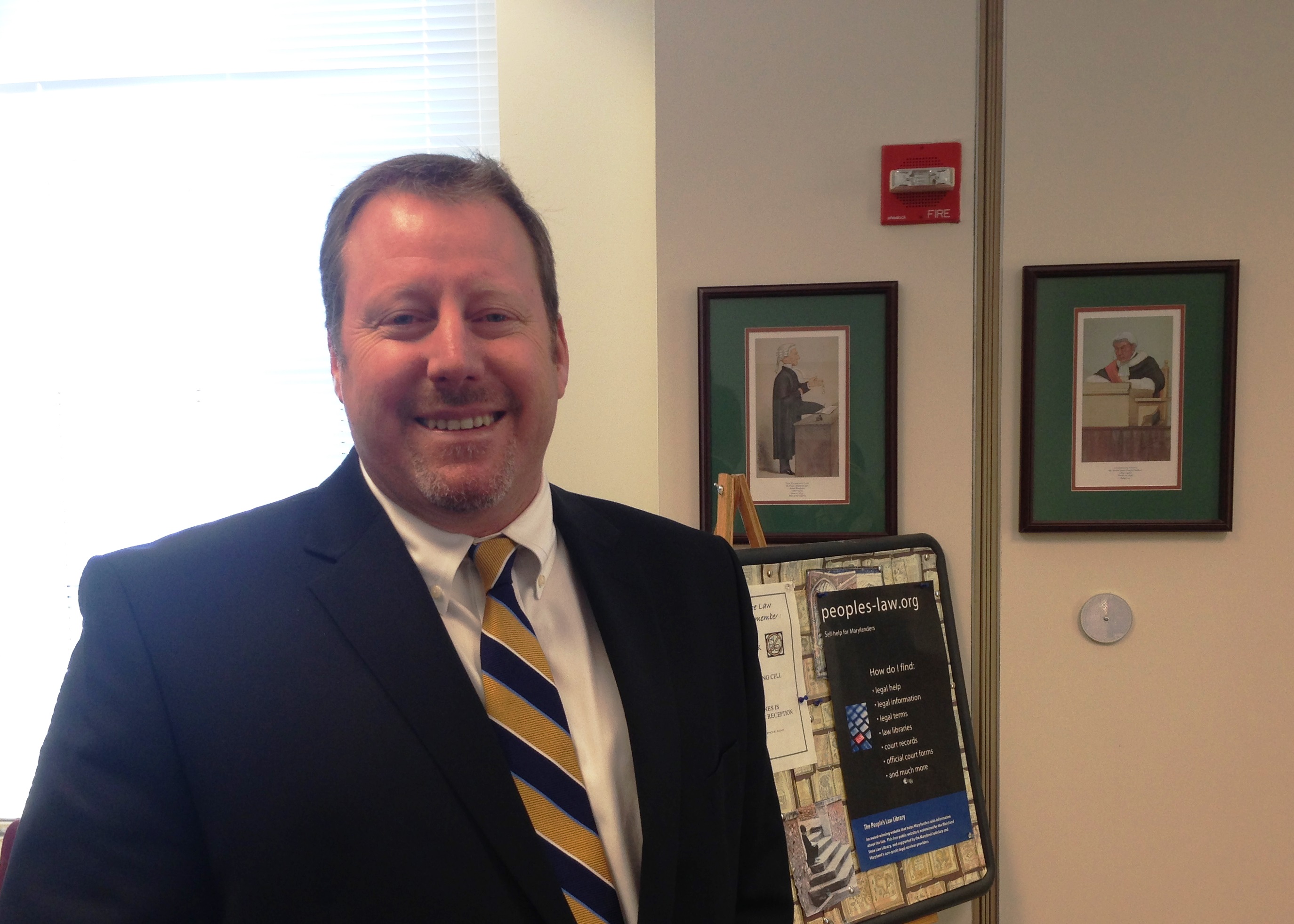
Thank you Mike!

The Ask A Lawyer In The Library program is a civil, non-family law, self-help program sponsored by The Anne Arundel Bar Association and the Maryland Volunteer Lawyers Service.  Every Wednesday, from 11:00 a.m. to 1:00 p.m., you can talk with a volunteer attorney for up to 20 minutes.  No appointment is necessary, but sign-up is required at the law library’s information desk.  Sign-up begins at 10:45 a.m., and time slots are determined by alottery. For more information, please seehttp://circuitcourt.org/legal-help/lawyer-in-the-library.

On Wednesday, December 2, 2015,  the Law Library hosted another successful Ask A Lawyer In The Library program.  Thank you Mike Ragland and Jack Paltell of Bell, Ragland, Gauges & Paltell, for volunteering and providing this service to the public. Six people took part in the program and were able to speak with the attorneys to request assistance on issues such as estates, foreclosure, school transfers, mortgages and contracts. The next program date is Wednesday, December 9, 2015.

poster-paltell (1)
Thank you Jack!

Are you an attorney interested in volunteering with the Ask A Lawyer In The Library program?  If so, please contact the law library. Attorney volunteers must be admitted to the Maryland Bar and be in good standing on the Client Security Trust Fund list.

More information about the program is available at http://circuitcourt.org/legal-help/lawyer-in-the-library.  The Ask A Lawyer In The Law Library program is a limited legal advice service.  The program is not a substitute for representation.  If you need an attorney to represent you, you can contact the Anne Arundel Bar Association’s Lawyer Referral and Information Service.
Categories
lawlibrary Pro Bono Self Represented

Ask A Lawyer In the Library – Wednesday Wrap-Up

Paul Farmer
Thank you Paul!

The Ask A Lawyer In The Library program is a civil, non-family law, self-help program sponsored by The Anne Arundel Bar Association and the Maryland Volunteer Lawyers Service. Every Wednesday, from 11:00 a.m. to 1:00 p.m., you can talk with a volunteer attorney for up to 20 minutes. No appointment is necessary, but sign-up is required at the law library’s information desk. Sign-up begins at 10:45 a.m., and time slots are determined by a lottery. For more information, please see http://circuitcourt.org/legal-help/lawyer-in-the-library.

Today, November 25, 2015, the Law Library hosted another successful Ask A Lawyer In The Library program. Paul Farmer of Gormley Jarashow Bowman LLC, our volunteer attorney, assisted 5 people with issues such as contracts, litigation procedure, real estate, credit card fraud and employment (non-compete agreement). The next program date is Wednesday, December 2, 2015.

??????????????
Thank you Nathan, Susan and Todd!

Last week, on November 18, 2015, the Law Library coordinated the Ask A Lawyer In The Library program at the North County Area Library in Glen Burnie, Maryland. Four people were able to meet with our volunteer attorneys, Susan Mays, Nathan Volke and Todd Cagwin, to discuss issues such as enforcement of a separation agreement, foreclosure, wills and bankruptcy. The next program date at the North County Area Library is December 16, 2015, from 4:30 p.m. to 6:30 p.m., and sign-up is via lottery at 4:15 p.m. 

More information about Ask a Lawyer in the Library program is available at http://circuitcourt.org/legal-help/lawyer-in-the-library. The Ask A Lawyer In The Law Library program is a limited legal advice service. The program is not a substitute for representation. If you need an attorney to represent you, you can contact the Anne Arundel Bar Association’s Lawyer Referral and Information Service.

Categories
lawlibrary Pro Bono Self Represented

Foreclosure Clinic Wrap-Up

Thank you Shikha!
Thank you Shikha!
Thank you Ellyn!
Thank you Ellyn!

Earlier this week, on November 18, 2015, the Law Library hosted its monthly Foreclosure Clinic! Thank you Shikha Parikh, Ellyn Riedl and the Maryland Volunteer Lawyers Service (MVLS) for providing this much-needed service to Maryland’s self-represented litigants. Two people met with our volunteer attorney to discuss their ongoing foreclosure matters.

The next clinic date is scheduled for Wednesday, December 16, 2015 from 1:00 p.m. to 3:00 p.m. Individuals are served on a first-come, first-served basis, and these consultations are usually twenty minutes. Please sign up, in-person, at the Law Library’s service desk on December 16, 2015.

We recommend that you prepare for your meeting with the attorney. Here are a few suggestions.

  • Bring all your paperwork or other information related to the foreclosure.
  • Write a list of specific questions.Organize your paperwork from most recent on top to oldest on bottom.
  • Write a list of specific questions.
  • Prepare a timeline of your matter, including any deadlines.

If you need assistance prior to December 16, 2015, check out these resources.

  • Civil Justice – Civil Justice provides Marylanders with foreclosure assistance. Check out their website or call them at 410-706-0174 for more information.
  • Foreclosure Mediation Brief Advice Project – This is a free clinic open to homeowners facing foreclosure without legal representation. To speak with an attorney, you can CALL THE HELPLINE at (443) 808-0076 on Mondays and Wednesdays from 10:30 a.m.-12:00 p.m. and 2:00 p.m.-4:00 p.m. You can also WALK-IN on Mondays and Wednesdays from 8:00 a.m.-4:30 p.m. (no new intake after 4:00 p.m.) at the Office of Administrative Hearings, Administrative Law Building, 11101 Gilroy Rd, Hunt Valley, Maryland 21031. For more information, check out our blog post.
  • Maryland Volunteer Lawyers Service (MVLS) – MVLS may be able to represent you in your foreclosure matter. Call MVLS at 410-547-6537 for more information.

You can find a list of additional assistance resources at the People’s Law Library.

Categories
lawlibrary Pro Bono Self Represented

Ask a Lawyer In the Library: Wednesday Wrap-up

IMG_1127
Thank you Sam Brown!

The Ask A Lawyer In The Library program is a civil, non-family law, self-help program sponsored by The Anne Arundel Bar Association and the Maryland Volunteer Lawyers Service. Every Wednesday, from 11:00 a.m. to 1:00 p.m., you can talk with a volunteer attorney for up to 20 minutes. No appointment is necessary, but sign-up is required at the law library’s information desk. Sign-up begins at 10:45 a.m., and time slots are determined by a lottery. For more information, please see http://circuitcourt.org/legal-help/lawyer-in-the-library.

On Wednesday, November 18, 2015, the Law Library hosted another successful Ask A Lawyer In The Library program. Thank you Sam Brown of Hillman, Brown & Darrow, P.A., for volunteering and providing this service to the public. Six people took part in the program and were able to speak with the attorney to request assistance with issues such as correcting a death certificate, contracts, debt collection, wills, estates, tax sales, and unemployment. The next program date is Wednesday, November 25, 2015.

It is helpful to prepare for your session with the attorney.  Here are some helpful tips:

  • Write a list of specific questions for the attorney.
  • Bring any paperwork and information related to the case.
  • Organize any paperwork from most recent on the top to oldest at the bottom.
  • Identify all deadlines.
  • Prepare a timeline of the legal issue.

If you would like to research your issue prior to your session with the attorney, please come find us at the Law Library’s information desk.  We are happy to assist you.

More information about the program is available at http://circuitcourt.org/legal-help/lawyer-in-the-library. The Ask A Lawyer In The Law Library program is a limited legal advice service. The program is not a substitute for representation. If you need an attorney to represent you, you can contact the Anne Arundel Bar Association’s Lawyer Referral and Information Service.

Categories
lawlibrary Pro Bono Self Represented

Protective Order versus Peace Order?

A common confusion for law library users is the difference between a protective order and a peace order. Essentially, whether you should be pursuing a protective order or a peace order will depend on your answer to two questions: (1) what is the relationship between you and the alleged abuser (for example, spouse, caretaker) and (2) what type of abuse you are claiming has happened. The Maryland Courts website provides a great overview of the differences between a protective order and a peace order, as well as helpful information regarding how to file for a protective or peace order.

Do you need help with filing your protective order or peace order? If so, the Maryland Courts Self-Help Centerthe District Court Self-Help Resource Center and the Annapolis YWCA can help.

Maryland Courts Self-Help Center
Monday-Friday, 8:30 AM – 8:000 PM
ONLINE CHAT
District Court Self-Help Resource Center
Monday-Friday, 8:30 AM – 4:30 PM
ONLINE CHAT
Annapolis YWCA Domestic Violence Hotline
24 Hour-Hotline 410-2226800

How do you keep the public from seeing information about you related to the protective or peace order? Check out these brochures for the petitioner (alleged victim) and respondents (alleged abuser).
For more information, please contact the Law Library! We can assist you in identifying self-help centers and other resources that may be able to assist you. In addition, we can show you how to access the court forms online.

Categories
lawlibrary Maryland Law Pro Bono Self Represented

Marital Settlement Agreement

Thanks to a change in Maryland law that went into effect last month, the Law Library has experienced a notable increase in the number of people requesting assistance with marital settlement agreements. The change in Maryland Law provides for an absolute divorce on the grounds of mutual consent if certain conditions are met. One of these conditions is the submission of a written settlement agreement that resolves all of the issues relating to alimony and the distribution of property.

What is a marital settlement agreement? A marital settlement agreement, also commonly referred to as a separation agreement or a property settlement agreement, is a written document that is a binding contract between a married couple in preparation for divorce, that they enter into voluntarily in order to address the division of their property, alimony and other relevant topics.

For background information, including negotiating and enforcing a marital settlement agreement, check out this article on the People’s Law Library.

Do you need to find a sample agreement? The Law Library can assist with you with locating samples that you can use as a starting point for drafting your marital settlement agreement. Please note, however, that the library cannot advise you as to what you should or should not include in your settlement agreement.

Do you need help with your marital settlement agreement? The Maryland Courts Self-Help Center (Phone: 410-260-1392) and the Family Law Self-Help Center (Phone: 410-280-5374) may be able to help. Please remember that the self-help centers can only provide limited legal assistance, so they may not be able to review your agreement in its entirety.

For more information, please contact the Law Library!

Categories
Holiday lawlibrary

Today is Veterans Day!

This is a reposting of our 2014 Veterans Day blog post.

The Library is Closed today, November 11, 2015, as Veterans Day is a Court Holiday.  The Law Library will be open tomorrow, Thursday, November 12, 2015. A list of Court Holidays is available on the Circuit Court’s website at http://www.circuitcourt.org/court-holidays.

For those of you who love grammar, this blog abides by the federal government’s spelling of Veterans Day. Specifically, there is no apostrophe before the “s” at the end of “Veterans”.  According to the U.S. Department of Veterans Affairs (note that there is no apostrophe here either), “Veterans Day” does not include an apostrophe “because it is not a day that ‘belongs’ to veterans, it is a day for honoring all veterans.”*  What do they mean?  Well, thanks to the addition of an apostrophe, the “Veteran” in “Veteran’s Day” and the “Veterans” in “Veterans’ Day” are nouns in the possessive case (singular in the first case and plural in the second case), which implies that the day itself belongs to an individual veteran or to veterans as a group.  However, without the apostrophe, the “Veterans” in “Veterans Day” is an attributive adjective, which means that “Veterans” describes an attribute of “Day” without being possessive.  Thus, the day does not belong to an individual veteran or veterans as a group. However, each of these three options can be grammatically correct.  Which do you prefer?

For more information about the history of Veterans Day, check out http://www.va.gov/opa/vetsday/vetdayhistory.asp.  Do you want to read the United States statute designating November 11 of each year as Veterans Day and a legal, public holiday, check out http://www.gpo.gov/fdsys/pkg/STATUTE-89/pdf/STATUTE-89-Pg479.pdf or you can come visit the library to view a hard copy.

*http://www.va.gov/opa/vetsday/vetday_faq.asp