Categories
lawlibrary

WestlawNext Patron Access

Have you tried WestlawNext Patron Access?

This new interface, WestlawNext, is now accessible in the law library’s computer room. WestlawNext is in addition to the “old” Westlaw, now referred to as Westlaw Classic, you may be accustomed to. One big difference that will be appreciated by library users is the ability to download and email results. These features are only available with Next, printing is the still the only option for the Classic version.

With WestlawNext you do not have to begin your research session by choosing a database to search. Instead, you need only type your search terms in the search box at the top of the page. This has a more Google like feel to it. However, you can still use the old Boolean terms and connectors in the search box and you can still select the database in which you would like to search. If you don’t though, your results will be presented to you in an organized manner. In the middle of the results screen will be the Overview. The Overview displays the results by document type displaying the most relevant within each category. Listed first will be cases, followed by statutes, regulations, secondary sources and more. On the left of the screen all of the categories will be listed with the number of results for each showing in parens. As you might guess, the number of results can be quite large, just like a Google search. This is where the ability to “filter” comes in. Once one of the categories of results or even “all results” is chosen, boxes will appear below the results on the left that allow the narrowing of the search. You could search within the results by typing in a search term such as “Maryland” or any combination of terms and connectors.

What if you just want to find a case or use Keycite, the citator? To search for a specific case, you would just enter the citation or case name in that same search box. A bar showing Keycite results will display automatically across the top of displayed documents once it is viewed.

Westlaw and WestlawNext Content

Both Westlaw Classic and WestlawNext have access to Maryland’s cases, code, regulation, Attorney General Opinions and some secondary sources such as the MLE and Maryland form books.

This is in addition to access to all state and federal cases and statutes, too. The general secondary sources include ALR, Black’s, the encyclopedias AmJur and CJS, and the Restatements and Principles of the Law. Titles of interest to litigators are the AmJur Proof of Facts, AmJur Trials and Causes of Action. The law library has a number of form books published by West. These sets along with many other titles not available in the library can be searched through the Form Finder on Westlaw and WestlawNext.

Next time you are in the law library, give WestlawNext a try at the computers labeled with a Westlaw sign. We will be happy to help you with your research using Next or the Westlaw Classic. You can also find out more through the online tutorials available on those Westlaw computers.

Categories
lawlibrary Maryland Law

New Maryland Laws Take Effect October 1, 2013

The two laws that have been in the news as October 1 approaches concern the sale of firearms and the use of cell phones while driving.

The Firearm Safety Act of 2013 (CH427) makes changes to current laws regulating the sale of certain firearms and ammunition, gun dealers and to

Senate Bill 339/House Bill 753 (CH638/CH637) makes violation of the law prohibiting cell phone use while driving a primary offense, that is one for which the driver can be stopped, and increases the fines and penalties,

Another road safety bill was Senate Bill 87 (CH 179) which requires the use of seat belts for passengers in the rear seat of a motor vehicle.

The “Slayers Rule” was codified in Maryland by SB489/HB1211 (CH485/CH486) which would disqualify “a person who feloniously and intentionally kills, conspires to kill, or procures the killing of the decedent is disqualified from inheriting, taking, enjoying, receiving, or otherwise benefitting from the death, probate estate, or nonprobate property of the decedent, or from receiving a general or special power of appointment conferred by the will or trust of the decedent, or from serving as a personal representative, guardian, or trustee of a trust created by the decedent ….”

The Task Force to Study Implementing a Civil Right to Counsel in Maryland was created by SB262 (CH35) to “study the current resources available to assist in providing counsel to low–income Marylanders compared to the depth of the unmet need, including the resulting burden on the court system and the stress on other public resources; study whether low–income Marylanders should have the right to counsel at public expense in basic human needs cases, such as those involving shelter, sustenance, safety, health, or child custody, including review and analysis of the Maryland Access to Justice Commission’s “Implementing a Civil Right to Counsel in Maryland” report and each other previous report by a task force, commission, or
workgroup on this issue; study alternatives regarding the currently underserved citizenry of the State and the operation of the court system; study how the right to counsel might be implemented in Maryland; study the costs to provide meaningful access to counsel and the savings to the court system and other public resources; study the possible revenue sources; and make recommendations regarding the matters …”

This is just a small sampling of new laws enacted by the 2013 session that will go into effect October 1, 2013. To read about more laws resulting from that session, see the 90 Day Report – A Review of the 2013 Session published by the Department of Legislative Services of the General Assembly of Maryland.

Categories
lawlibrary Pro Bono

Legal incubators: for grads and needy clients in the ABA Journal

From the ABA Journal online today an article on the use incubators that provide an office for new attorneys to work with experienced attorneys and provide service to those in need:

Legal Rebels Profile : Law firm incubators help both grads and needy clients, Posted Sep 18, 2013 8:30 AM CDT By G.M. Filisko

Other articles on the topic includes links to different law school incubator programs:

Solos & Small Firms : Growing Justice: Law Schools Hop on the Incubator Trend posted Oct 1, 2012 1:30 AM CDT By Deborah L. Cohen

Law School Disrupt Blog Creative new ideas for training community lawyers: Solo incubators and training firms posted on October 1, 2012 mentions the University of Maryland Francis King Carey School of Law.

 In Maryland:

Maryland Civil Justice is an example of such a program in Maryland.  Its missoin is stated on the website: “Civil Justice, Inc is a Maryland non-profit corporation formed for the purpose of increasing the delivery of legal services to clients of low and moderate income while promoting a statewide network of solo, small firm and community based lawyers who share a common commitment to increasing access to justice through traditional and non-traditional means.”

Categories
lawlibrary

Creative new ideas for training community lawyers: Solo incubators and training firms

Categories
lawlibrary Legal Technology

New Maryland Rules for Electronic Filing

Issue 02, Spring, 2013 of Moving Justice Forward, the quarterly bulletin that provides information on the implementation of Maryland Electronic Courts (MDEC), reports that the rules order concerning e-filing was posted on May 2, 2013 on the Judiciary website. The 176th Report and Supplement Rules Order, filed May 1, will go into effect July 1, 2013.

The report included changes to existing rules because of e-filing and the new Title 20,  Electronic Filing and Case Management.    The new rule 20-102 states that the new Title 20 will apply only where MDEC has been established and will start with Anne Arundel County.  Issues covered include how attorneys will register, a new definition of what a “day” is, signatures, procedures for self-represented litigants and access to records. The article that begins on page 9 provides a good overview of the new Title 20.

More information can be found on the MDEC webpage and in the previous issue of Moving Justice Forward, Issue 01, Winter 2013


Categories
lawlibrary

MSBA on YouTube

An article in the Bar Bulletin of the Maryland State Bar Association reported the debut of  “”Maryland Legal Lions,” a new video series intended to highlight the wisdom, experience, and motivations of Maryland’s long-practicing Bar members…”  The first video features Herbert S. Garten.

This video can be found on the MSBA YouTube channel with a variety of other videos including the MSBA participation in the Polar Bear Plunge, a debate on contributory vs. comparative negligence,  highlights from the MSBA 13th Annual Solo and Small Firm Conference and current MSBA President John P. Kugel’s installation speech and the accompanying slideshow of his life.


Categories
lawlibrary Legal Technology

ABA Offers Friday Seminars on Technology

The ABA has announced that it will be offering a series of  live webinars  on the topic of the practice of law and technology:

Future Friday Seminars: Strengthening Your Practice Through Technology

The series will begin on May 3 with  an Overview of the Future of Law.  Other topics include:  Document Assembly and AutomationThe Virtual Office, Working Remotely, and Online CollaborationThe Paperless Office and Digital WorkflowsUnderstanding Your Finances and Alternative Billing Strategies, and Building a Client-Focused Law Practice.


Categories
lawlibrary Pro Bono Self Represented

Anne Arundel Local Pro Bono Committee – Update

The following was submitted to the AABA newsletter, the Barrister.

A report on the Local Pro Bono Committee should begin with an overview of the Committee’s purpose.  The Local Pro Bono Committee is a separate entity from the AABA Pro Bono Committee and exists per Maryland Rule 16-902.  The rule provides that the committee  consist of a combination of judges, attorneys and the general public. The Committee is charged with working with legal services providers and pro bono referral organizations to develop a Local Pro Bono Action Plan to “promote pro bono legal service to meet the needs of persons of limited means in the county.”  Kevin Shaeffer chaired the committee that wrote the plan in 2004.  The Committee stopped meeting after a time.  In 2010 interest in pro bono service sparked by AABA president Jonathan Kagan lead to the formal reconstitution of the Committee in July 2011.  Through the work of the Committee and volunteer attorneys Anne Arundel County has established some good limited legal advice programs.  The Committee  must now concentrate on what can be done to increase pro bono representation in our county.  (Anne Arundel is again last in the state in reporting pro bono hours.)  The Committee has partnered with the Maryland Volunteer Lawyers Service which acts as the Anne Arundel Pro Bono referral service.  There are still more clients from Anne Arundel County in need of representation than there are Anne Arundel volunteers.

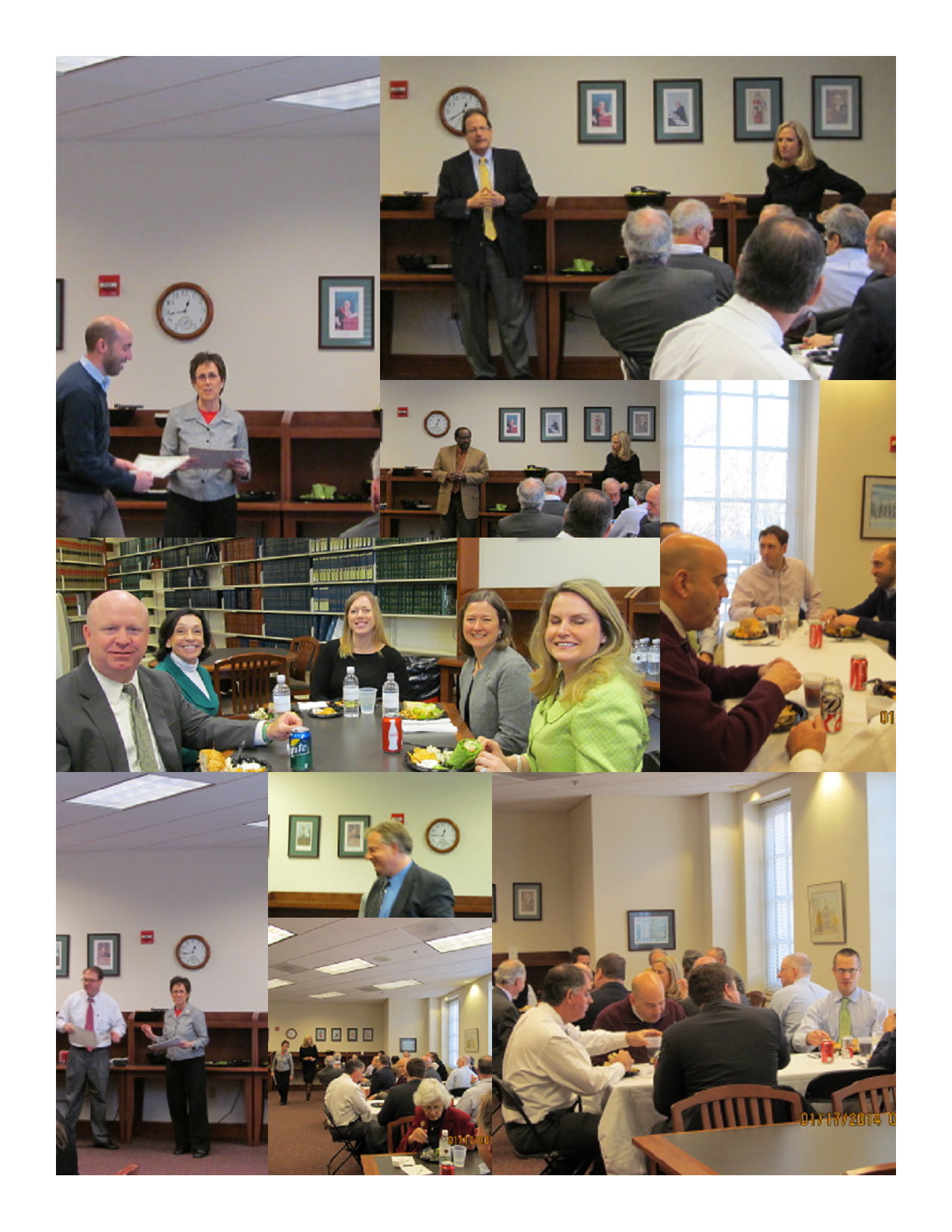
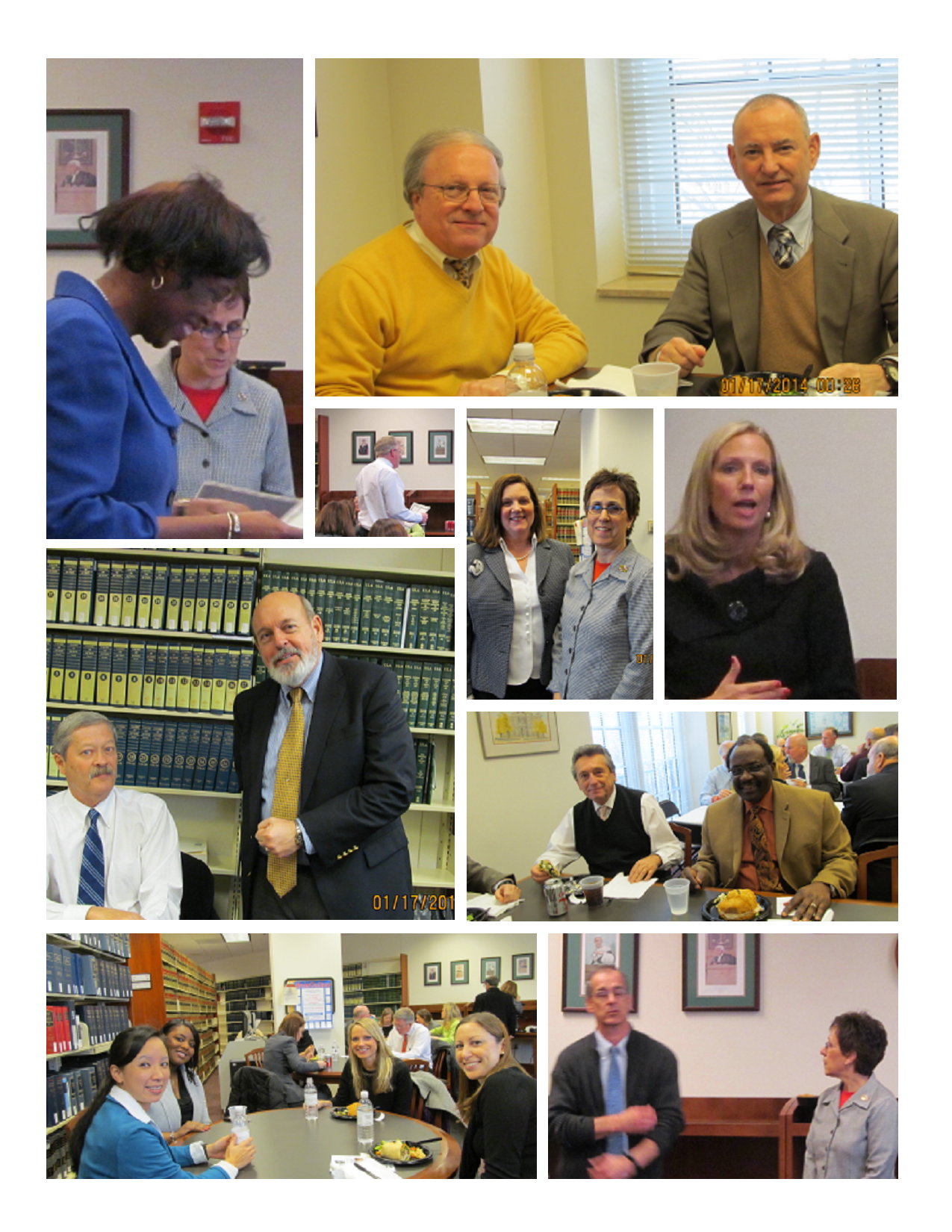
The 2013 year began with the Annual Pro Bono Recognition Lunch in January.  Attorneys who volunteer in the “Ask a Lawyer” programs by providing services in the Anne Arundel County Public Law Library, at the North County Area Library of the Anne Arundel County Public Library system and at the Annual Anne Arundel County Homeless Resource Day were invited to lunch where they were thanked for their service and received certificates that detailed their pro bono hours for the year of 2012.  Circuit court judges Hon. Nancy Davis-Loomis, Hon. Phillip Caroom, Hon. Ronald Silkworth, Hon. Alison Asti and Master Timothy Thurtle as well as Court Administrator, Doug Hofstedt, and Nancy Faulkner, Director of Court Operations attended to show their appreciation.  The 38 volunteer “Ask a Lawyer” attorneys provided 206 hours of free legal advice to 445 clients in 2012.

This slideshow requires JavaScript.

The Annual Anne Arundel Homeless Resource Day was held on March 16 at Glen Burnie High School.  Even though it was not held on the traditional last weekend of March, attendance was not affected.  This was the 6th Annual Homeless Resource Day and the 5th in which Anne Arundel Attorneys have provided legal services.  There were 14 volunteers this year who took on either a morning or afternoon shift.  The volunteers consisted of a large contingent of Legal Aid Attorneys who have the experience needed to handle the issues facing many of the homeless.  This year Anita Bailey, Margaret Leonard, Amy Siegel, and Kathy Hughes represented Legal Aid.  Judson Arnold and Denis O’Connell who are with the Office of the Public Defender were able to help with criminal issues.  They performed 2 intakes for representation. The varied experience of private practice attorneys is always needed and appreciated.  This year Make Valadez, Tasnima Apol, Jim Sauer, Kari Fawcett, Gene Brennan, Scott MacMullan and Ginina Stevenson volunteered. Past experience had shown that there are usually more clients in the morning but this year the afternoon seemed just as busy.  There were 88 participants in all who used the legal services this year to find answers to 95 legal questions. While this was a small increase over last year, in 2009, the first year, there were only 4 attorneys who helped 50 clients.  The majority of those are seeking assistance with expungement or family law.  Representatives from the Homeless Persons Representation Project (HPRP), Atonia Fasanelli and Katie Scott provided support with expungement issues at the event and provided training for volunteers beforehand.  Of the 31 asking for assistance with expungement, there were 4 referrals to HPRP and only 3 that actually met the qualifications for filing.  This year we had additional assistance from the Maryland Volunteer Lawyers Service.  Executive Director, Bonnie Sullivan and Sally Snowberger, the Foreclosure Prevention Housing Counselor,  were able to provide assistance and perform intakes for the 7 who qualified.  The Anne Arundel County Homeless Resource Day was the first Homeless Day in Maryland and is being used as a model across the state at the request of Governor O’Malley.

In order to share ideas for the promotion of pro bono service the Court of Appeals Standing Committee on Pro Bono Service held a regional meeting on March 18 for the Local Pro Bono Committees of Anne Arundel, Carroll, Frederick and HowardCounties. Although it was held in March just two days before the start of spring,  the winter-like weather made travel to HowardCounty difficult.  Still, most all who responded made it to the meeting. Attending from Anne Arundel County were Joanie Bellistri, Law Librarian and Chair; Anita Bailey, Lisa Sarro, and Sarah Frush of the Legal Aid Bureau; Judge North and Judge Silkworth from the Anne Arundel County Circuit Court;  Chris Poulsen,  Anne Arundel County Department of Social Services Program Manager; Scott MacMullan representing the Anne Arundel County MSBA Young Lawyers Section and Elizabeth Morris of the Office of the Attorney General.  The program involved a number of guided, small group discussions on topics such as the pro bono referral process, volunteer recruitment and retention, collaborating with the bench, and client needs v. volunteer interest and expertise.  Each group was created by assigned dinner seating so that there was a good mix based on location and background at each table for the discussion.  Group findings were reported to the larger group and all seemed to touch on the same basic points no matter the topic.  In brief, it was found that there is a need for full representation, especially in family law cases, that is not being met.  Pro bono service needs to become a part of the local bar’s culture.  Methods for encouraging increased pro bono participation included recognition of volunteers through awards programs, special treatment in the court room or free photocopies, and thank you letters from the bench; support of volunteers with training, mentoring and case costs; and awareness of legal service programs that will place volunteer attorneys  and programs that provide referrals for those in need of the services.  The evening ended with a meeting of each county’s representatives to discuss their county’s needs and to plan for that county’s pro bono activities. As a result you should see renewed efforts to increase pro bono participation in Anne Arundel County.  Right now, please consider giving pro bono service a try.  If every attorney in Anne Arundel would agree to take just one pro bono case, we could see a big improvement in the lives of those facing legal problems without assistance and an increase in Anne Arundel’s reported pro bono hours.

Please contact the Local Pro Bono Committee with any questions, ideas, suggestions or to join: 410-222-1387 or library@circuitcourt.org.

Categories
lawlibrary Maryland Law

Status of State Online Legal Materials – Authentication, Official Status, Preservation…

According to AALL’s Washington Blawg post today  the  American Association of Law Libraries ” Digital Access to Legal Information Committee (DALIC) has created a new website to host information about the status of online legal materials in every state with respect to authentication, official status, preservation, permanent public access, copyright, and universal citation.”

Categories
lawlibrary

Try Sailor at the Anne Arundel County Public Library for Access to Journal Articles and Non-Legal Information

The Anne Arundel County Public Library is a good resource for those times when your research requires non-legal information.  Through the AACPL website you can access Sailor.  As explained on the website: “Sailor is a service of Maryland’s public libraries that provides broadband Internet access for public libraries, schools and local government in Maryland, and an extensive collection of research databases for the use of Maryland public library customers.”

The Research Databases “button” provides access to a number resources  that might be of interest to legal researchers. Links and the database descriptions from Sailor follow:

Business Source Premier  for “business related newspapers and journals. Non-journal content includes company profiles, country reports, industry reports, market research reports, and SWOT analyses.”

MasterFile  for “a wide variety of journal articles, magazine articles, primary source documents, reference book entries and images.”

Regional Business News   where you can “search articles from Crain CommunicationsBusiness PhiladelphiaDaily Record (Baltimore Edition), New York Observer andWashington Times.”

Science Reference Center   where you can “search science oriented reference sources, science journals, biographies, and science related animations, videos, and images.”

In order to access you may have to enter the number on your library card or choose your library system from a drop-down menu.

Please remember that when you need non-legal information for your research you can use your public library right from your desk.