Categories
lawlibrary Legal Technology

Online Databases in the Limelight – LexisNexis*

IMG_1894
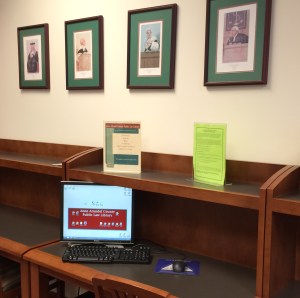
Here is one of the computers in the Law Library with access to LexisNexis.

Online databases can be invaluable, time-saving  tools to any legal researcher as they provide organized access to a wide array of legal resources as well as sophisticated search tools.  Many online databases, including fee-based databases, are available at the Law Library, free of charge, to library patrons.  This month, the blog will feature six of the online databases available at the Law Library.

Lexis is one of the biggest players in the world of legal publishing and online legal research.  Lexis offers LexisNexis, a platform for searchable databases with access to a wide array of primary resources, such as federal and state statutes, federal and state regulations and case law, as well as secondary resources, such as encyclopedias, treatises, journal articles and form books.*  

There is a myriad of tools, resources and services available through Lexis.  Some of the most popular secondary Maryland resources available through our LexisNexis subscription are Pleading Causes of Action in Maryland  and MICPEL’s Marital Settlement Agreement Form. In addition, LexisNexis provides Shepard’s Case Citations, which identifies all published cases and other sources that cite (e.g., refer to) the case being reviewed by the legal researcher and provides additional information, such as the reason why the later case cited the case at hand.  This is important information to have as later cases can affect the value of the case at hand or later cases may better address the matter being researched.  In addition, the Law Library’s subscription includes document delivery services (e.g., email, print, PDF downloads, RTF downloads) so that users can access certain resources after the online session has concluded.

Can I access LexisNexis at the Library? Yes! The Law Library offers FREE, in-person access to LexisNexis. As access to LexisNexis can be cost-prohibitive to attorneys and self-represented litigants, the Law Library provides free access to meet its users’ legal research needs.

How to use LexisNexis in the Library? There are three computers designated for public LexisNexis access in the law library. Each computer has a small sign indicating the availability of LexisNexis. You do not need log-in information — simply double-click on the LexisNexis icon on the computer’s desktop.

What to do if you need help with LexisNexis? Please ask for help at the Law Library’s service desk. We can provide technical assistance (e.g.,  how to get started, how to use and search the database) as well as research assistance (e.g.,  how best to formulate your search, which resources to target for more refined searches).

Can I access the Law Library’s LexisNexis subscription from home? No. The Law Library’s current subscription permits in-person use at the library only.

*This blog post is an update of a blog post previously published on December 2, 2014.

**For more information about understanding legal research, including the difference between primary and secondary legal resources, check out these research guides.

Categories
lawlibrary Legal Technology

Online Databases in the Limelight – WestlawNext*

IMG_1889
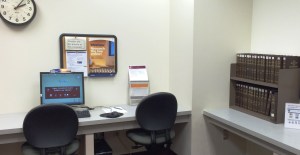
Here’s a snapshot of one of the computers in our computer room with WestlawNext access.

Online databases can be invaluable, time-saving  tools to any legal researcher as they provide organized access to a wide array of legal resources as well as sophisticated search tools.  Many online databases, including fee-based databases, are available at the Law Library, free of charge, to library patrons.  This month, the blog will feature six of the online databases available at the Law Library.

Thomson Reuters is one of the biggest players in the world of legal publishing and online legal research and is the publisher of WestlawNext, a platform for searchable databases with access to a wide array of primary resources, such as federal and state statutes, federal and state regulations and case law, as well as secondary resources, such as encyclopedias, treatises, journal articles and form books.**

There is a myriad of tools, resources and services available through both WestlawNext.  One of the most popular services provided through WestlawNext is KeyCite, which is an online case citator service. KeyCite identifies all published cases and other sources that cite (e.g., refer to) the case being reviewed by the legal researcher and provide additional information, such as the reason why the later case cited the case at hand.  This is important information to have as later cases can affect the value of the case at hand or later cases may better address the matter being researched.  In addition, document delivery services (e.g., email, print, PDF downloads, RTF downloads) are available through the Law Library’s WestlawNext subscription. This means that users can access certain resources after the online session has concluded.

Can I access WestlawNext at the Library? Yes! The Law Library offers FREE, in-person access to WestlawNext. As access to WestlawNext can be cost-prohibitive to attorneys and self-represented litigants, the Law Library provides free access to meet its users’ legal research needs.

How to use WestlawNext in the Library? There are two computers designated for public WestlawNext access in the law library. Each computer has a small sign indicating the availability of WestlawNext. You do not need log-in information — simply double-click on the WestlawNext icon on the computer’s desktop.

What to do if you need help with WestlawNext? Please ask for help at the Law Library’s service desk. We can provide technical assistance (e.g.,  how to get started, how to use and search the database) as well as research assistance (e.g.,  how best to formulate your search, which resources to target for more refined searches).

Can I access the Law Library’s WestlawNext subscription from home? No. The Law Library’s current subscription permits in-person use at the library only.

*This blog post is an update of a blog post previously published on December 2, 2014.

**For more information about understanding legal research, including the difference between primary and secondary legal resources, check out these research guides.

Categories
lawlibrary Legal Technology

What’s a .law domain?

Untitled drawingThe Internet Corporation for Assigned Names and Numbers (ICANN)* granted Minds + Machines, a Santa Monica, California company, with an exclusive license to operate .law as a new top-level domain. This new domain is only available to attorneys and law firms. Anyone who applies for a .law domain must certify that he or she is an attorney and submit to a verification process. Minds + Machines started taking orders last month, and some prominent, large law firms have signed up as early adopters.

For more information, check out these sites and articles.

Stay tuned for news regarding other possible new domains in the future, such as .esq and .lawyer.

*Created in 1998, ICANN is a non-profit organization responsible for the coordination of namespaces on the Internet. For more information about ICANN, check out https://www.icann.org/.

Categories
lawlibrary Legal Technology

Legal Research in the Blogosphere – In Custodia Legis

Legal research can be challenging, even for experienced attorneys; however, there are many resources available to assist both attorneys and non-attorneys with their legal research needs.  The Legal Research in the Blogosphere series will share blog posts and online sites that legal researchers may find useful.

In Custodia Legis (“in the custody of the law”) is the blog of the Law Librarians of Congress. The blog’s posts cover a wide array of U.S. and foreign legal topics, including legal trends, developments and issues. In addition, the blog is a great resource to learn more about Congress.gov, which is the official federal website for U.S. federal legislative information. Below, please find a sampling of posts that caught our attention.

Check out the blog at http://blogs.loc.gov/law/!


Categories
lawlibrary Legal Technology

Innovation

There have been a lot of recent articles about innovation in the legal field and legal profession. Innovation topics include embracing the newest technologies available to assist attorneys and non-attorneys through the legal process to innovations in the practice of law itself. Check out these articles, blogs, blog posts, and websites and let us know your thoughts!

Categories
lawlibrary Legal Technology

Looking for information about your case?

The Maryland Judiciary Case Search website provides the public with online access to the Maryland Judiciary’s case records. Available information includes party names, city and state, case number, date of brith, trial date, charge and case disposition for District Court traffic, criminal and civil case records as well as Circuit Court criminal and civil case records. Maryland Rules 16-1001 through 16-1011 govern the public’s access to these records.

Here are some frequently asked questions we receive at the Law Library regarding Case Search.

  1. Can I access case search from home? Yes! The website address is http://casesearch.courts.state.md.us/inquiry/inquiry-index.jsp. You can also access links to Case Search from the Circuit Court’s website (www.circuitcourt.org) or the Maryland Courts website (www.mdcourts.gov).
  2. Can I access Case Search at the courthouse? Yes! The Law Library has public access computers that you can use to access Case Search.
  3. Is this official information? No, Case Search does not provide the official case record. It is simply a brief summary of the case record.
  4. What if want additional case information or the official case record? You will need to ask the court either in person at the courthouse or in writing. The clerk’s office does not accept telephone requests.
  5. I need help understanding what the abbreviations mean. You can find information about event codes and descriptions here. Criminal event codes and descriptions are available here. Traffic event codes and descriptions are available here. Civil event codes and descriptions are available here.
  6. Why can’t I find my case information? Not all case records will be made available on Case Search. For example, certain cases are protected by the Maryland Rules, such as juvenile cases, adoptions and sealed cases. In addition, landlord/tenant and marriage license records are not available on Case Search. There are also differences in how far back in history the case records will go. For the District Court, criminal case records accessible via Case Search date back to late 1991, and civil case records date back to 1989. For the Circuit Court, it will vary by courthouse. A list of specific date ranges is available here.
  7. Where can I search for Circuit Court Judgments and Liens? Once you have accepted the terms and conditions for Case Search, click on the “Search for Circuit Court Judgments and Liens”  link at the top of the page. Note that federal and state liens may not always be available.
  8. Where can I find information about an estate? Check out Estate Search, which is available at http://registers.maryland.gov/main/search1.html.
  9. Where can I find land records or copies of deeds? Check out MdLandRec.net. You will need to register to use this site, and there may be a time delay due to this registration process.

If you have additional questions about Case Search, check out the FAQ page available at http://mdcourts.gov/casesearch2/faq.html.


Categories
lawlibrary Legal Technology

Legal Research in the Blogosphere – Copyright

Legal research can be challenging, even for experienced attorneys; however, there are many resources available to assist both attorneys and non-attorneys with their legal research needs.  The Legal Research in the Blogosphere series will share blog posts and online sites that legal researchers may find useful.

Copyright issues are hot topics in the legal and library worlds. Rachel Englander, one of the Communications Chairs for the Law Library Association of Maryland (LLAM)  is writing an ongoing series of blog posts for the LLAM blog dealing with copyrights. Check out her posts, which discuss copyright generally, licensing rights, and Digital Rights Management (DRM).

Categories
lawlibrary Legal Technology

Legal Research in the Blogosphere – SCOTUSblog

Legal research can be challenging, even for experienced attorneys; however, there are many resources available to assist both attorneys and non-attorneys with their legal research needs. The Legal Research in the Blogosphere series will share blog posts and online sites that legal researchers may find useful.

Scotusblog was founded in 2002 by the wife and husband team of Amy Howe and Tom Goldstein. Currently, the blog has over twenty writers who publish posts on issues closely related to the Supreme Court, such as posts on every merits case before the Supreme Court (prior to argument, after argument and after decision). This can be a great resource for those legal researchers interested in following the Supreme Court’s current events.

For non-attorney readers, the blog publishes “Plain English” posts where cases are drafted in plain language. The blog also includes an introduction to Supreme Court procedure, a glossary of legal terms, and biographies of the Supreme Court Justices. For visual learners, the blog has a multimedia library with videos of interviews with the Supreme Court Justices, news footage, presentations, and other resources. You can read about the blog’s vision here.

Please note that the blog is not the official website for the Supreme Court. The official Supreme Court website is available at http://www.supremecourt.gov/default.aspx.  On the Supreme Court’s website you will also find a wealth of information, including biographies of the Supreme Court Justices, opinions, calendars for oral arguments, Court Rules, and guidance for attorneys. If you are interested in learning more about the Supreme Court and Supreme Court practice, please stop by the Law Library.

Categories
lawlibrary Legal Technology

Online Databases in the Limelight

Online databases can be invaluable, time-saving tools to any legal researcher as they provide organized access to a wide array of legal resources as well as sophisticated search functions.  Many online databases, including fee-based databases, are available at the Law Library, free of charge, to library patrons.

Throughout the month of December 2014, this blog featured a series on online databases available at the Law Library for patrons’ use.  The featured databases include Bloomberg BNA, HeinOnline, LexisNexis, VerdictSearch and Westlaw, which are all subscription-based databases that the Law Library offers to its patrons free of charge.  However, this is just a small sampling of the legal databases that may be available for your use.  If you are interested in learning more about online legal databases, including databases that are available without subscription, please contact us!

Many other law libraries also provide their library patrons with access to online legal databases free of charge.  For other local access points to online legal databases, you can check out these libraries.

Categories
lawlibrary Legal Technology

Online Databases in the Limelight – Bloomberg BNA

Online databases can be invaluable, time-saving  tools to any legal researcher as they provide organized access to a wide array of legal resources as well as sophisticated search tools.  Many online databases, including fee-based databases, are available at the Law Library, free of charge, to library patrons.  Each Tuesday of this month, this blog will highlight one of the many databases available at the Law Library.

The Law Library provides library patrons with free access to the Bloomberg BNA (Bureau of National Affairs) legal database.  While there is a great deal of overlap between the resources available on Bloomberg BNA and Westlaw and LexisNexis, which we highlighted earlier this month, Bloomberg BNA materials are only available on Bloomberg BNA.  These BNA materials include the following.

  • United States Law Week provides searchable access to Supreme Court opinions, Supreme Court Practice and Federal Appellate Practice.
  • Family Law Reporter provides a weekly roundup of family law developments and trends.
  • Criminal Law Reporter provides an overview of trends, development and issues in criminal law.
  • Lawyer’s Manual on Professional Conduct provides news and guidance regarding attorneys’ ethics and professional conduct.

Law Library patrons may access Bloomberg BNA’s database  in the library’s computer room free of charge.  If you have any questions regarding how to use the database, please come to the Law Library’s service desk.

For more information about understanding legal research, including the difference between primary and secondary legal resources, check out these research guides.