Categories
lawlibrary

Legal Research in the Blogosphere – Law Review Commons

Legal research can be challenging, even for experienced attorneys; however, there are many resources available to assist both attorneys and non-attorneys with their legal research needs.  The Legal Research in the Blogosphere series will share blog posts and online sites that legal researchers may find useful.

The Law Review Commons (http://lawreviewcommons.com/) is a free, online collection of law reviews and legal journals.  (A law review is a scholarly journal focused on legal issues, which is most commonly published through a law school or a bar association.)  Users can both search and browse the collection of current and archival content.  Check out the Law Review Commons and let us know what you think!

The Law Sites blog (http://www.lawsitesblog.com/) provides a short review fo the Law Review Commons at http://www.lawsitesblog.com/2014/11/largest-free-collection-law-reviews-web.html.

Categories
Holiday lawlibrary

Today is Repeal Day!

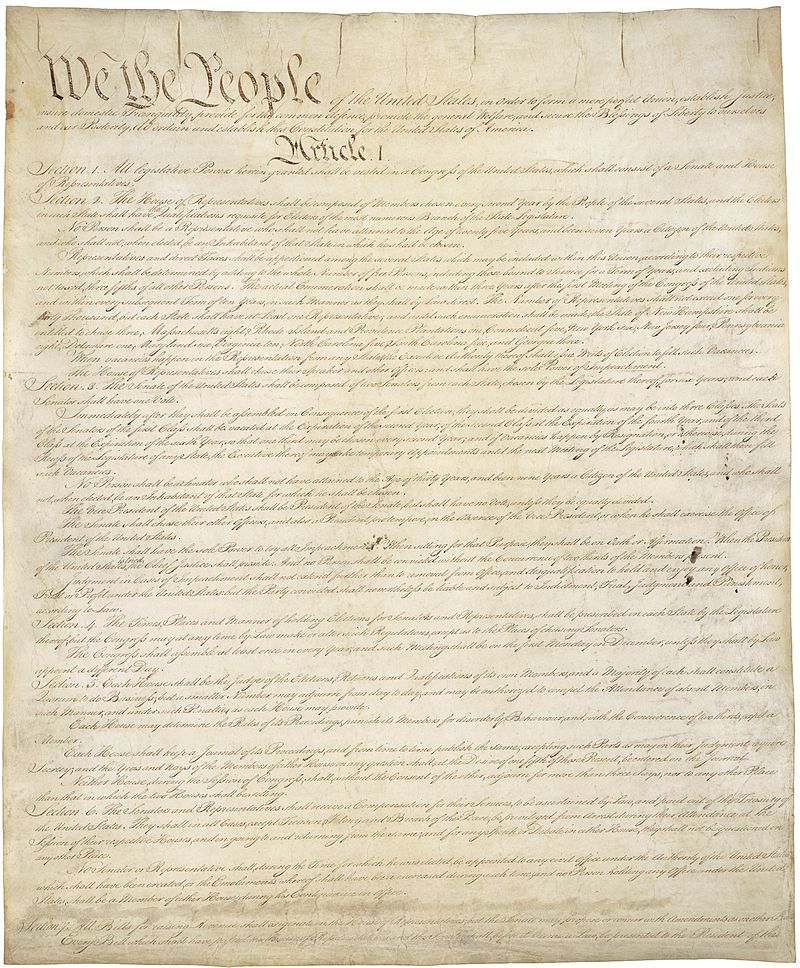
Constitution_of_the_United_States,_page_1Pursuant to the U.S. Constitution, an amendment to the U.S. Constitution may be proposed by Congress (with a two-thirds majority vote in both the Senate and the House of Representatives) or by a constitutional convention called for by two-thirds of the states.  A proposed amendment must then be ratified by three-fourths of the states.

On December 18, 1917, Congress passed the 18th Amendment, which was then ratified by the states on January 16, 1919.  The 18th Amendment established what is commonly referred to as Prohibition, which generally prohibited the manufacture, storage, transportation and sale of intoxicating liquors.  Less than two decades later, on February 20, 1933, Congress passed the 21st Amendment, which repealed the 18th Amendment.  State conventions ratified the 21st Amendment on December 5, 1933.  Utah provided the 36th vote, which was the final vote necessary for ratification.  (Today, a successful amendment to the Constitution would require 38 states to ratify the amendment; however, in 1933, Hawaii and Alaska were not yet states, thus only 36 states were required in order to meet the three-fourths requirement.)  As a result, today, December 5, 2014, is celebrated as Repeal Day.

Are you interested in learning more about the U.S. Constitution and Constitutional Law?  Check out these resources!

– The official transcript of the Constitution of the United States is available through the National Archives website at http://www.archives.gov/exhibits/charters/constitution_transcript.html.

– You can read the full-text of the Constitutional Amendments, including the 18th Amendment and 21st Amendment at http://www.archives.gov/exhibits/charters/constitution_amendments_11-27.html.

– Information about the constitutional amendment process is available at http://www.archives.gov/federal-register/constitution/ and http://www.lexisnexis.com/constitution/amendments_howitsdone.asp.

– If you are interested in learning more about Prohibition, check out http://www.history.com/topics/prohibition.

As always, the Law Library is available to assist you with your research needs.  For example, the Law Library provides users with access to the LexisNexis and Westlaw databases, which include many constitutional law primary and secondary resources.


Categories
lawlibrary Pro Bono Self Represented

Ask a Lawyer In the Library: Wednesday Wrap-up

admin-ajax
Thank you Mike and Jack!

The Ask A Lawyer In The Library program is a civil, non-family law, self-help program sponsored by The Anne Arundel Bar Association and the Maryland Volunteer Lawyers Service.  Every Wednesday, from 11:00 a.m. to 1:00 p.m., you can talk with a volunteer attorney for up to 20 minutes.  No appointment is necessary, but sign-up is required at the law library’s information desk.  Sign-up begins at 10:45 a.m., and time slots are determined by a lottery. For more information, please see http://circuitcourt.org/legal-help/lawyer-in-the-library.


On Wednesday, December 3, 2014,  the Law Library hosted another successful Ask A Lawyer In The Library program. Thank you, Mike Ragland and Jack Paltell, from Bell, Ragland, Gauges & Paltell, for volunteering and providing this service to the public. Eight people took part in the program and were able to speak with the attorney to request assistance with issues such as a power of attorney, will, insurance claims, appeals to the Maryland Court of Special Appeals, and real estate closing questions. The next program date is Wednesday, December 10, 2014.

It is helpful to prepare for your session with the attorney.  Here are some helpful tips:

  • Write a list of specific questions for the attorney.
  • Bring any paperwork and information related to the case.
  • Organize any paperwork from most recent on the top to oldest at the bottom.
  • Identify all deadlines.
  • Prepare a timeline of the legal issue.

If you would like to read up on your issue prior to your session with the attorney, please come find us at the Law Library’s information desk. We are happy to assist you.

More information about the program is available at http://circuitcourt.org/legal-help/lawyer-in-the-library.  The Ask A Lawyer In The Law Library program is a limited legal advice service.  The program is not a substitute for representation.  If you need an attorney to represent you, you can contact the Anne Arundel Bar Association’s Lawyer Referral and Information Service.
 
Categories
lawlibrary

Legal Research in the Blogosphere

Legal research can be challenging, even for experienced attorneys; however, there are many resources available to assist both attorneys and non-attorneys with their legal research needs.  The Legal Research in the Blogosphere series will share blog posts and online sites that legal researchers may find useful.
 

We would like to share a great post on the Ms. JD blog (http://ms-jd.org/) about legal research strategy, which is available at http://ms-jd.org/blog/article/research-makeover-strategy-in-legal-research-seeing-your-research-through-f.  

Targeted to attorneys, the post lays out a three-step process for legal research: (1) strategize, (2) dive-in and (3) knowing when to stop.  The post also provides some tips about how to keep your research organized.  Check out the post, and let us know your thoughts!

Categories
lawlibrary Legal Technology

Online Databases in the Limelight – Westlaw & Lexis

photo 1
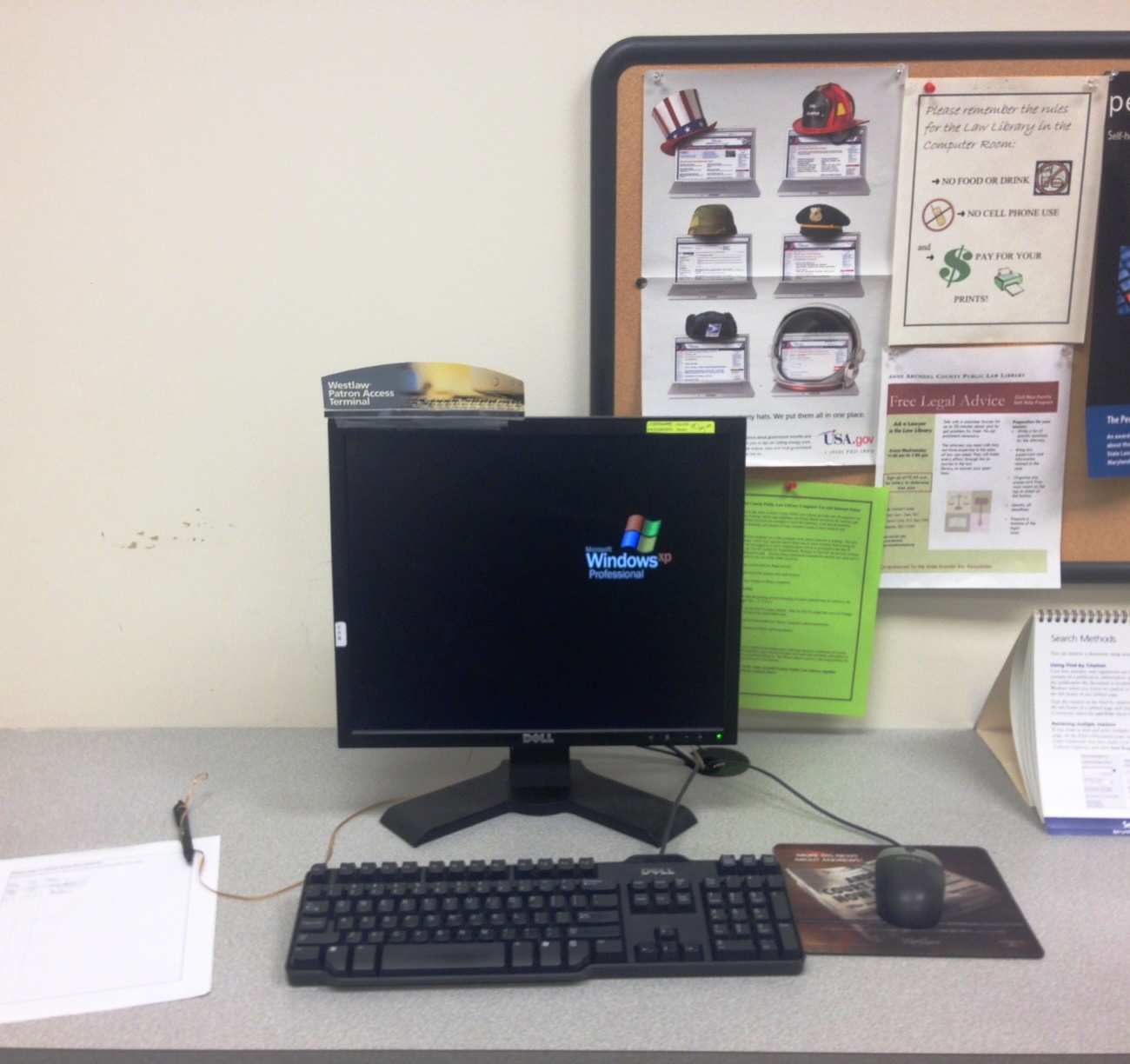
Here is one of two computers in our computer room that prioritizes Westlaw access.

Online databases can be invaluable, time-saving tools to any legal researcher as they provide organized access to a wide array of legal resources as well as sophisticated search tools. Many online databases, including fee-based databases, are available at the Law Library, free of charge, to library patrons. Each Tuesday of this month, this blog will highlight one of the many databases available at the Law Library.

Westlaw (www.westlaw.com) and Lexis (www.lexis.com) are two of the biggest players in the world of legal publishing and online legal research. These two legal services providers offer searchable databases with access to a wide array of primary resources, such as federal and state statutes, federal and state regulations and case law, as well as secondary resources, such as encyclopedias, treatises, journal articles and form books.*

There is a myriad of tools, resources and services available through both Westlaw and Lexis. One of the most popular services provided through Westlaw and Lexis is the online case citator service provided by each database (KeyCite for Westlaw and Shepard’s Case Citations for Lexis). These case citators identify all published cases and other sources that cite (e.g., refer to) the case being reviewed by the legal researcher and provide additional information, such as the reason why the later case cited the case at hand. This is important information to have as later cases can affect the value of the case at hand or later cases may better address the matter being researched. In addition, both databases provide document delivery services (e.g., email, PDF downloads, RTF downloads) so that users can access certain resources after the online session has concluded.

Access to these two databases can be very expensive, but the Law Library maintains subscriptions to both databases so that library patrons can access the databases free of charge. Law Library patrons can directly access these databases in the Law Library’s computer room. For those of you who are new to Westlaw and Lexis, the Law Library is available to assist you in learning how to use both databases and identifying the resources available through the databases. For those of you who have used Westlaw and Lexis in the past, the Law Library can assist you with searching more effectively. Please drop by the Law Library’s service desk, and we will help you get started.

 *For more information about understanding legal research, including the difference between primary and secondary legal resources, check out these research guides.

Categories
Holiday lawlibrary

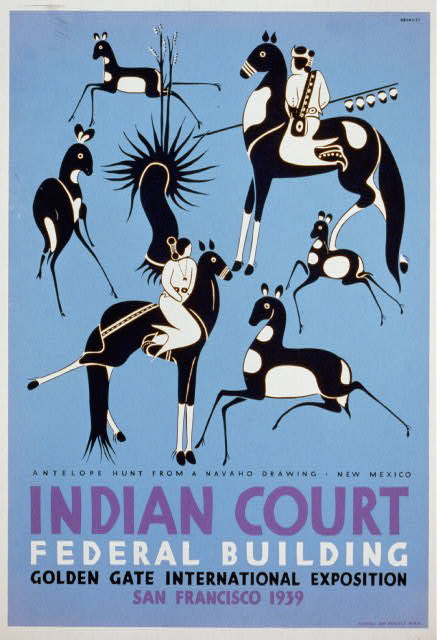
Today is American Indian Heritage Day!

Indian Court Federal Building Picture

Did you know…

–  that former President George H. W. Bush approved a Joint Resolution of Congress in 1990 that designated November 1990 as National American Indian Heritage month (and similar proclamations were issued yearly since 1994)?

–  that the first American Indian Day was declared in 1916 in the state of New York?

–  that 184 Native American tribes throughout the United States support the establishment of a day honoring American Indian heritage?

–  that, according to the United States Census Bureau’s 2010 census, 0.4% of the total Maryland population is American Indian and/or Alaska Native?

–  that today is American Indian Heritage Day in Maryland?  As of October 1, 2008, pursuant to House Bill 83/Chapter 486, American Indian Heritage Day is a Maryland state holiday that falls on the Friday after Thanksgiving Day.

Are you interested in researching Native American law?  If so, then check out the Georgetown Law Library’s guide at http://www.law.georgetown.edu/library/research/guides/nativeamericanlaw.cfm.

More information about Native American Heritage Month is available at http://nativeamericanheritagemonth.gov/.

Categories
Holiday lawlibrary

Happy Thanksgiving!

fdr-thanksgiving-1939
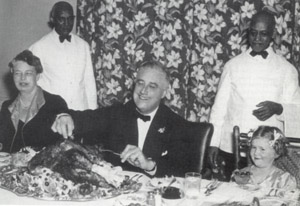
Former President Franklin Roosevelt is celebrating Thanksgiving dinner here in 1939.

The Law Library is Closed today, November 27, 2014, as Thanksgiving is a Court Holiday.  The Law Library will be open tomorrow, Friday, November 28, 2014. A list of Court Holidays is available on the Circuit Court’s website.

The celebration of Thanksgiving as an official holiday in the United States has an interesting history.  In 1777, the first national Thanksgiving was declared by the Continental Congress.  The United States celebrated its first Thanksgiving holiday in 1789 pursuant to a proclamation issued by former President George Washington that established Thursday, November 26, 1789 as a “Day of Publick Thanksgivin”.

Subsequent presidents issued similar proclamations, but with varying dates for celebration. Former President Abraham Lincoln’s 1863 proclamation established the last Thursday of November as the day of the celebration, but, in 1939, due to economic concerns deriving from a shortened Christmas shopping season as a result of Thanksgiving’s celebration date, former President Franklin D. Roosevelt issued a proclamation moving Thanksgiving to the second to last Thursday of November, which lengthened the Christmas shopping season.  Thirty-two states followed the federal government’s lead, but sixteen states did not.  Thus, Thanksgiving was celebrated on two different days throughout the country until 1941 when Roosevelt signed a joint resolution from Congress establishing the fourth Thursday in November as the federal holiday. More information, including featured documents, such as the 1941 Joint Resolution, is available at http://www.archives.gov/legislative/features/thanksgiving/.

Categories
lawlibrary Pro Bono Self Represented

Ask a Lawyer In the Library: Wednesday Wrap-up

Attorney Photo
Thank you, Michael Marinello!

The Ask A Lawyer In The Library program is a civil, non-family law, self-help program sponsored by The Anne Arundel Bar Association and the Maryland Volunteer Lawyers Service.  Every Wednesday, from 11:00 a.m. to 1:00 p.m., you can talk with a volunteer attorney for up to 20 minutes.  No appointment is necessary, but sign-up is required at the law library’s information desk.  Sign-up begins at 10:45 a.m., and time slots are determined by a lottery. For more information, please see http://circuitcourt.org/legal-help/lawyer-in-the-library.

On Wednesday, November 26, 2014,  the Law Library hosted another successful Ask A Lawyer In The Library program.  Thank you, Michael J. Marinello of Baldwin, Kagan & Gormley, for volunteering and providing this service to the public. One person took part in the program and was able to speak with the attorney to request assistance property issues and procedural questions.  The next program date is Wednesday, December 3, 2014.

Are you an attorney interested in volunteering with the Ask A Lawyer In The Library program?  If so, you must be admitted to the Maryland Bar and be in good standing on the Client Security Trust Fund list.  Interested attorneys should contact the law library.

More information about the program is available at http://circuitcourt.org/legal-help/lawyer-in-the-library.  The Ask A Lawyer In The Law Library program is a limited legal advice service.  The program is not a substitute for representation.  If you need an attorney to represent you, you can contact the Anne Arundel Bar Association’s Lawyer Referral and Information Service.


 
Categories
lawlibrary

Updated laws in Damages in Tort Actions

Damages in Tort ActionsThe law is constantly evolving as legislatures pass new laws and courts decide new cases.  As a result, the resources available at the law library must be constantly updated to reflect these changes to the law. Updating the library’s resources is an interesting and eye-opening task for someone like me, who is new to law libraries and the law.  And while these updates are usually commonplace and nothing extraordinary, every so often, the chapter headings verge on the edge of humor or something a little more sinister. At the very least, the chapter titles are rather conducive to dark jokes and a running commentary.

Damages in Tort Actions, an eleven-volume reference set available in the library, started off as expected with a generic chapter entitled “Damages in General.” Nothing seemed unusual or strange in the title – it fit rather well with the title of the volume. But things took a drastic dramatic turn  chapter four, “Pain and Suffering,”chapter seven: “Mishandling of Dead Bodies.”  Does this happen often enough to merit an entire chapter?  To make matters worse, chapter eight is the “Loss of Enjoyment of Life.”  Was an existential crisis looming?

These blunt headings were merely the beginning of the narrative unfolding before me, and I began to read the chapter titles as the outline of thriller novel with a dose of dark humor. Is this truly a reference set?  Instead, perhaps it is the tragedy of an over-worked attorney or the narrative of a disgruntled student. Whoever the story may follow, he or she is not a happy individual.

The thriller novel chapter headings continued throughout the update of Damages in Tort Actions. Chapter twenty-one: “Survival Actions” and chapter twenty-seven: “Loss of a Chance of Survival”  seem to foreshadow a rather gruesome and unhappy conclusion to this possible murder mystery. This reference set calls to mind what might happen if Edgar Allan Poe and John Grisham had decided to enter into the legal reference market.

Damages in Tort Actions may have been mistitled. A better name for it may be The Plight of the Human Existence or, perhaps, It Only Gets Worse from Here.

For more interesting, humorous, or odd laws come into the Law Library and look around!

Categories
lawlibrary Pro Bono Self Represented

Ask a Lawyer In the Library: Wednesday Wrap-up

Brian Lyman
Thank you, Brian Lyman!
The Ask A Lawyer In The Library program is a civil, non-family law, self-help program sponsored by The Anne Arundel Bar Association and the Maryland Volunteer Lawyers Service.  Every Wednesday, from 11:00 a.m. to 1:00 p.m., you can talk with a volunteer attorney for up to 20 minutes.  No appointment is necessary, but sign-up is required at the law library’s information desk.  Sign-up begins at 10:45 a.m., and time slots are determined by a lottery. For more information, please see http://circuitcourt.org/legal-help/lawyer-in-the-library.


On Wednesday, October 22, 2014,  the Law Library hosted another successful Ask A Lawyer In The Library program.  Thank you, Brian Lyman of Hillman, Brown and Darrow, for volunteering and providing this service to the public. Three people took part in the program and were able to speak with the attorney to request assistance with issues such as powers of attorney, financial debts and jurisdiction.  The next program date is Wednesday, November 26, 2014.

Are you an attorney interested in volunteering with the Ask A Lawyer In The Library program?  If so, you must be admitted to the Maryland Bar and be in good standing on the Client Security Trust Fund list.  Interested attorneys should contact the law library.

More information about the program is available at http://circuitcourt.org/legal-help/lawyer-in-the-library.  The Ask A Lawyer In The Law Library program is a limited legal advice service.  The program is not a substitute for representation.  If you need an attorney to represent you, you can contact the Anne Arundel Bar Association’s Lawyer Referral and Information Service.