Categories
lawlibrary

Online Databases in the Limelight – Bloomberg BNA*

Online databases can be invaluable, time-saving  tools to any legal researcher as they provide organized access to a wide array of legal resources as well as sophisticated search tools.  Many online databases, including fee-based databases, are available at the Law Library, free of charge, to library patrons.  This month, the blog will feature six of the online databases available at the Law Library.

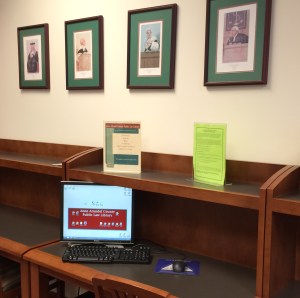
The Law Library provides library patrons with free access to the Bloomberg BNA (Bureau of National Affairs) legal database.  While there is a great deal of overlap between the resources available on Bloomberg BNA and WestlawNext and LexisNexis, which we highlighted earlier this month, Bloomberg BNA materials are only available on Bloomberg BNA.  These BNA materials include the following.

  • United States Law Week provides searchable access to Supreme Court opinions, Supreme Court Practice and Federal Appellate Practice.
  • Family Law Reporter provides a weekly roundup of family law developments and trends.
  • Criminal Law Reporter provides an overview of trends, development and issues in criminal law.
  • Lawyer’s Manual on Professional Conduct provides news and guidance regarding attorneys’ ethics and professional conduct.
  • “Slices” of Labor and Employment Law: The Americans with Disabilities Act Manual, which provides news and guidance related to ADA issues, developments, and state law compliance, and the Employment Discrimination Report, which covers developments in the procedural and substantive aspects of employment discrimination law, are the two resources the library has available through this database.

Can I access Bloomberg BNA at the Library? Yes! The Law Library offers FREE, in-person access to Bloomberg BNA.

How to use Bloomberg BNA in the Library? You can access Bloomberg BNA from any of the public access computers available at the Law Library.

What to do if you need help with Bloomberg BNA? Please ask for help at the Law Library’s service desk. We can provide technical and research assistance.

Can I access the Law Library’s Bloomberg BNA subscription from home? No. The Law Library’s current subscription permits in-person use at the library only.

For more information about understanding legal research, including the difference between primary and secondary legal resources, check out these research guides.

*This blog post is an update of a blog post previously published on December 30, 2014.
Categories
lawlibrary Legal Technology

Online Databases in the Limelight – HeinOnline*

Online databases can be invaluable, time-saving  tools to any legal researcher as they provide organized access to a wide array of legal resources as well as sophisticated search tools.  Many online databases, including fee-based databases, are available at the Law Library, free of charge, to library patrons.  This month, the blog will feature six of the online databases available at the Law Library.

Do you want what’s on the computer screen to match what was printed? Are you interested in accessing historical articles? If so, then HeinOnline may be the online database service for you! Launched in 2000, HeinOnline is the largest, image-based legal research database with full-text and page images of law review articles, treatises and primary sources of law.  HeinOnline users can search for specific resources or browse one of the database’s many collections.  For example, you can browse the Law Journal Library collection and see a listing of a specific Law Review’s articles, organized chronologically. Or, if you are interested in railroad case law from the 1800s, you can search HeinOnline’s Early American Case Law collection.

In addition, the Law Library’s subscription now includes the ABA Law LIbrary Collection Periodicals! Through this database, library users have digital access to 98 ABA titles, including ABA Journal, ABA Journal of Labor & Employment Law, Family Law Litigation, Mass Torts Litigants, Products Liability, and Trial Practice. A complete list of publications is available here.

Why use HeinOnline? Can’t I access the same information through LexisNexis or WestlawNext? Yes, there is overlap between the resources available on HeinOnline and the resources available on the WestlawNext and Lexis.  However, there are two big reasons why you may prefer to use HeinOnline over WestlawNext and LexisNexis.  First, HeinOnline is an image-based database. This means that you can see page images of documents, including graphics, which match the print versions of the resources.  Second, HeinOnline has a greater focus on retrospective historical coverage, meaning that you can find older documents that may be unavailable in the other databases.  

Can I access HeinOnline at the Library? Yes! The Law Library offers FREE, in-person access to HeinOnline.

How to use HeinOnline in the Library? You can access HeinOnline from any of the public access computers available at the Law Library.

What to do if you need help with HeinOnline? Please ask for help at the Law Library’s service desk. We can provide technical and research assistance.

Can I access the Law Library’s HeinOnline subscription from home? No. The Law Library’s current subscription permits in-person use in the courthouse only.

For more information about understanding legal research, including the difference between primary and secondary legal resources, check out these research guides.

*This blog post is an update of a blog post previously published on December 9, 2014.

Categories
lawlibrary Legal Technology

Online Databases in the Limelight – LexisNexis*

IMG_1894
Here is one of the computers in the Law Library with access to LexisNexis.

Online databases can be invaluable, time-saving  tools to any legal researcher as they provide organized access to a wide array of legal resources as well as sophisticated search tools.  Many online databases, including fee-based databases, are available at the Law Library, free of charge, to library patrons.  This month, the blog will feature six of the online databases available at the Law Library.

Lexis is one of the biggest players in the world of legal publishing and online legal research.  Lexis offers LexisNexis, a platform for searchable databases with access to a wide array of primary resources, such as federal and state statutes, federal and state regulations and case law, as well as secondary resources, such as encyclopedias, treatises, journal articles and form books.*  

There is a myriad of tools, resources and services available through Lexis.  Some of the most popular secondary Maryland resources available through our LexisNexis subscription are Pleading Causes of Action in Maryland  and MICPEL’s Marital Settlement Agreement Form. In addition, LexisNexis provides Shepard’s Case Citations, which identifies all published cases and other sources that cite (e.g., refer to) the case being reviewed by the legal researcher and provides additional information, such as the reason why the later case cited the case at hand.  This is important information to have as later cases can affect the value of the case at hand or later cases may better address the matter being researched.  In addition, the Law Library’s subscription includes document delivery services (e.g., email, print, PDF downloads, RTF downloads) so that users can access certain resources after the online session has concluded.

Can I access LexisNexis at the Library? Yes! The Law Library offers FREE, in-person access to LexisNexis. As access to LexisNexis can be cost-prohibitive to attorneys and self-represented litigants, the Law Library provides free access to meet its users’ legal research needs.

How to use LexisNexis in the Library? There are three computers designated for public LexisNexis access in the law library. Each computer has a small sign indicating the availability of LexisNexis. You do not need log-in information — simply double-click on the LexisNexis icon on the computer’s desktop.

What to do if you need help with LexisNexis? Please ask for help at the Law Library’s service desk. We can provide technical assistance (e.g.,  how to get started, how to use and search the database) as well as research assistance (e.g.,  how best to formulate your search, which resources to target for more refined searches).

Can I access the Law Library’s LexisNexis subscription from home? No. The Law Library’s current subscription permits in-person use at the library only.

*This blog post is an update of a blog post previously published on December 2, 2014.

**For more information about understanding legal research, including the difference between primary and secondary legal resources, check out these research guides.

Categories
lawlibrary Legal Technology

Online Databases in the Limelight – WestlawNext*

IMG_1889
Here’s a snapshot of one of the computers in our computer room with WestlawNext access.

Online databases can be invaluable, time-saving  tools to any legal researcher as they provide organized access to a wide array of legal resources as well as sophisticated search tools.  Many online databases, including fee-based databases, are available at the Law Library, free of charge, to library patrons.  This month, the blog will feature six of the online databases available at the Law Library.

Thomson Reuters is one of the biggest players in the world of legal publishing and online legal research and is the publisher of WestlawNext, a platform for searchable databases with access to a wide array of primary resources, such as federal and state statutes, federal and state regulations and case law, as well as secondary resources, such as encyclopedias, treatises, journal articles and form books.**

There is a myriad of tools, resources and services available through both WestlawNext.  One of the most popular services provided through WestlawNext is KeyCite, which is an online case citator service. KeyCite identifies all published cases and other sources that cite (e.g., refer to) the case being reviewed by the legal researcher and provide additional information, such as the reason why the later case cited the case at hand.  This is important information to have as later cases can affect the value of the case at hand or later cases may better address the matter being researched.  In addition, document delivery services (e.g., email, print, PDF downloads, RTF downloads) are available through the Law Library’s WestlawNext subscription. This means that users can access certain resources after the online session has concluded.

Can I access WestlawNext at the Library? Yes! The Law Library offers FREE, in-person access to WestlawNext. As access to WestlawNext can be cost-prohibitive to attorneys and self-represented litigants, the Law Library provides free access to meet its users’ legal research needs.

How to use WestlawNext in the Library? There are two computers designated for public WestlawNext access in the law library. Each computer has a small sign indicating the availability of WestlawNext. You do not need log-in information — simply double-click on the WestlawNext icon on the computer’s desktop.

What to do if you need help with WestlawNext? Please ask for help at the Law Library’s service desk. We can provide technical assistance (e.g.,  how to get started, how to use and search the database) as well as research assistance (e.g.,  how best to formulate your search, which resources to target for more refined searches).

Can I access the Law Library’s WestlawNext subscription from home? No. The Law Library’s current subscription permits in-person use at the library only.

*This blog post is an update of a blog post previously published on December 2, 2014.

**For more information about understanding legal research, including the difference between primary and secondary legal resources, check out these research guides.

Categories
lawlibrary Pro Bono Self Represented

Protective Order versus Peace Order?

A common confusion for law library users is the difference between a protective order and a peace order. Essentially, whether you should be pursuing a protective order or a peace order will depend on your answer to two questions: (1) what is the relationship between you and the alleged abuser (for example, spouse, caretaker) and (2) what type of abuse you are claiming has happened. The Maryland Courts website provides a great overview of the differences between a protective order and a peace order, as well as helpful information regarding how to file for a protective or peace order.

Do you need help with filing your protective order or peace order? If so, the Maryland Courts Self-Help Centerthe District Court Self-Help Resource Center and the Annapolis YWCA can help.

Maryland Courts Self-Help Center
Monday-Friday, 8:30 AM – 8:000 PM
ONLINE CHAT
District Court Self-Help Resource Center
Monday-Friday, 8:30 AM – 4:30 PM
ONLINE CHAT
Annapolis YWCA Domestic Violence Hotline
24 Hour-Hotline 410-2226800

How do you keep the public from seeing information about you related to the protective or peace order? Check out these brochures for the petitioner (alleged victim) and respondents (alleged abuser).
For more information, please contact the Law Library! We can assist you in identifying self-help centers and other resources that may be able to assist you. In addition, we can show you how to access the court forms online.

Categories
lawlibrary Maryland Law Pro Bono Self Represented

Marital Settlement Agreement

Thanks to a change in Maryland law that went into effect last month, the Law Library has experienced a notable increase in the number of people requesting assistance with marital settlement agreements. The change in Maryland Law provides for an absolute divorce on the grounds of mutual consent if certain conditions are met. One of these conditions is the submission of a written settlement agreement that resolves all of the issues relating to alimony and the distribution of property.

What is a marital settlement agreement? A marital settlement agreement, also commonly referred to as a separation agreement or a property settlement agreement, is a written document that is a binding contract between a married couple in preparation for divorce, that they enter into voluntarily in order to address the division of their property, alimony and other relevant topics.

For background information, including negotiating and enforcing a marital settlement agreement, check out this article on the People’s Law Library.

Do you need to find a sample agreement? The Law Library can assist with you with locating samples that you can use as a starting point for drafting your marital settlement agreement. Please note, however, that the library cannot advise you as to what you should or should not include in your settlement agreement.

Do you need help with your marital settlement agreement? The Maryland Courts Self-Help Center (Phone: 410-260-1392) and the Family Law Self-Help Center (Phone: 410-280-5374) may be able to help. Please remember that the self-help centers can only provide limited legal assistance, so they may not be able to review your agreement in its entirety.

For more information, please contact the Law Library!

Categories
lawlibrary Pro Bono Self Represented

Family Law Resources for Self-Represented Litigants at the Law Library


Questions related to family law matters, such as custody, child support, divorce and visitation, are the library’s most frequently asked questions. Here is a quick rundown of available resources and referrals. If you want to learn more or can’t find what you’re looking for, please
contact us!


Are you looking for background and general information? If so, check out these sites.

In addition, the Library carries the following print materials, which may assist you.

  • Maryland Family Law, 5th \ Fader (KFM 1294.F33 2011)
  • Maryland Divorce and Separation Law, 9th \ Thomas (KFM 1300.M37 2009)
  • Maryland Domestic Relations Forms \ Turnbull (KFM 1294A65 T38)
  • Maryland Law Encyclopedia – Children, Custody and Support, Divorce, Husband and Wife, Parent and Child
  • Maryland Digest – Child Custody, Child Support, Divorce, Husband and Wife, Parent and Child


Are you interested in the Maryland Code and Rules of Procedure? For the Maryland Code, the Family Law Article contains much of the law regarding divorce, custody, child support, etc. You can access them in print as well as online in the Law Library. If you want to access these resources from home, check out these links.


Do you need to conduct case law research? The Law Library has both online and print sources to assist you. Online sources include LexisNexis and WestlawNext. Don’t know how to use these online databases? We can show you how! (If you don’t know what case law research is, check out this article – http://peoples-law.org/understanding-legal-research) If you want to conduct case law research from home, here are some options.


Do you want assistance with your family law matter? These organizations provide limited legal assistance.

FLSHCThe Family Law Self-Help Center is located in the back of the Law Library; provides legal information and forms to assist unrepresented litigants in matters of divorce, custody/visitation, child support and name changes.
WALK-IN HOURS:

Monday, Wednesday and Thursday: 9:00 a.m. – 4:30 p.m.
Tuesday and Friday:  9:00 a.m. – 1:00 p.m.
TELEPHONE HOURS (410-280-5374):
Monday through Friday:  9:00 a.m. – 12:00 a.m.

Women’s Law Center
Family Law Hotline 1-800-845-8550 M- F 9:30 am – 4:30 pm.
Family Law Forms Helpline operates at 1-800-818-9888 Tu, W & F 9:00 am – 12:30 pm, Th 9:00 am – 4:00 pm.
Spanish-1-877-293-2507 (leave message)


Are you looking for attorney to represent you in your family law matter? These organizations may be able to assist you.

Legal Aid Bureau
General Civil Legal Services
Income eligibility screening required
Regional Office 410-972-2700
M-F 9:00 AM-5:00 PM.

Maryland Volunteer Lawyers Service
General Legal Services
Income eligibility screening required
410-547-6537 or 800-510-0050
M-TH 9:00AM-1:00PM.

Lawyer Referral Service (Anne Arundel County)
410-280-6961
All civil and criminal cases with no eligibility screening.
Fees set by attorney
M-F 8:45 AM – 2:15 PM


Are you looking for domestic violence assistance? These organizations may be able to assist you.

House of Ruth Domestic Violence Legal Clinic
24 Hour Hotline for Domestic Violence Victims
888-880-7884

YWCA of Annapolis and Anne Arundel County
Domestic Violence Assistance.
Legal Services Intake 24 Hour Voicemail
410-222-6800


Categories
lawlibrary Maryland Law

New Maryland Laws Took Effect on October 1, 2015 – Can’t Find What You’re Looking For?

Untitled drawingNew Maryland laws took effect yesterday, October 1, 2015! We published a series of posts highlighting a few of the newly enacted laws, but this is just a small sampling of the new laws enacted by the 2015 Legislative Session. A full listing of new laws is available here, courtesy of the Department of Legislative Services (DLS) of the General Assembly of Maryland.

Was there a major issue from the 2015 session that was not covered in this series? The 90 Day Report – A Review of the 2015 Session, published by DLS, includes a hyperlinked list of Major Issues from 2015 such as the budget, education, public safety (body-worn cameras), taxes and voting rights. In addition, we previously covered some changes to family law here, which are effective today.

Can’t find what you’re looking for?  DLS publishes a Popular Terms List as a reference for current legislation that is often referred to by the public and media by certain popular terms.  Also, the Department of Legislative Services of the General Assembly of Maryland publishes compilations of executive orders.

Do you prefer paper sources?  The Law Library’s collection includes a copy of the 2015 Maryland Legislative Review Service, published by LexisNexis, which summarizes the 2015 Acts of the Maryland General Assembly Regular Session and organizes the 2015 Acts by topical headings. In addition, the Law Library’s Maryland collection includes print copies of the current Annotated Code of Maryland.

Don’t forget – the Law Library is here if you have questions or would like additional information. Contact us!

Categories
lawlibrary Maryland Law

New Maryland Laws Take Effect on October 1, 2015 – Spotlight on Protective Orders

New Maryland laws take effect on October 1, 2015!  We will be publishing a series of posts highlighting a few of the newly enacted laws.  This series is just a small sampling of the new laws enacted by the 2015 Legislative Session.  To read about more laws resulting from the 2015 session, see the 90 Day Report – A Review of the 2015 Session published by the Department of Legislative Services (DLS) of the General Assembly of Maryland. For a full listing of new laws effective October 1, 2015, check out this publication from DLS.

House Bill 263 (Chapter 233) – The circumstances under which a court must issue a permanent final protective order now includes, under certain specified circumstances, the conviction of the individual for conspiracy or solicitation to commit murder. You can learn more about this new law, including its legislative history, here.

House Bill 390 (Chapter 418) – A person is authorized to file a protective order petition if the alleged abuse occurred in Maryland or if the person eligible for relief is a Maryland resident. Authorization to file a peace order petition is provided if the alleged specified act occurred in Maryland or the petitioner is a Maryland resident. You can learn more about this new law, including its legislative history, here.

Note that all quotations, unless noted otherwise, are attributable to the 90 Day Report – A Review of the 2015 Session published by the Department of Legislative Services of the General Assembly of Maryland, which is available online at http://mgaleg.maryland.gov/Pubs/LegisLegal/2015rs-90-day-report.pdf.

Categories
lawlibrary Maryland Law

New Maryland Laws Take Effect on October 1, 2015 – Spotlight on the Election Administration

Untitled drawing (1)New Maryland laws take effect on October 1, 2015!  We will be publishing a series of posts highlighting a few of the newly enacted laws.  This series is just a small sampling of the new laws enacted by the 2015 Legislative Session.  To read about more laws resulting from the 2015 session, see the 90 Day Report – A Review of the 2015 Session published by the Department of Legislative Services (DLS) of the General Assembly of Maryland. For a full listing of new laws effective October 1, 2015, check out this publication from DLS.

Senate Bill 204 (Chapter 332)/ House Bill 396  – The date of the presidential primary election is now the fourth Tuesday in April, which would avoid the need to conduct the 2016 early voting on Easter Sunday. In addition, there are changes to various administrative procedures and deadlines as well as the elimination of the requirement for “certain campaign finance entities to file a campaign finance report on the third Tuesday in April in a presidential election year.” You can learn more about this new law, including its legislative history, here.

House Bill 284 (Chapter 82) – An election director of the local board of elections must, within 10 business days, “determine whether a summary of local legislation contained in a petition is legally sufficient” prior to circulating the petition for signatures. The intent is to prevent situations where signatures on a petition must be discarded due to a determination, after the collection of signatures, that the summary of local legislation was not legally sufficient. You can learn more about this new law, including its legislative history, here.

Senate Bill 5 (Chapter 318) – The canvass of votes cast during early voting must be open to public observation, and “a board of canvassers and the staff of a local board may be observed as they complete each part of the canvass by certain authorized observers and any other individuals who wish to be present.” You can learn more about this new law, including its legislative history, here.

Note that all quotations, unless noted otherwise, are attributable to the 90 Day Report – A Review of the 2015 Session published by the Department of Legislative Services of the General Assembly of Maryland, which is available online at http://mgaleg.maryland.gov/Pubs/LegisLegal/2015rs-90-day-report.pdf.