Categories
lawlibrary

What’s new …

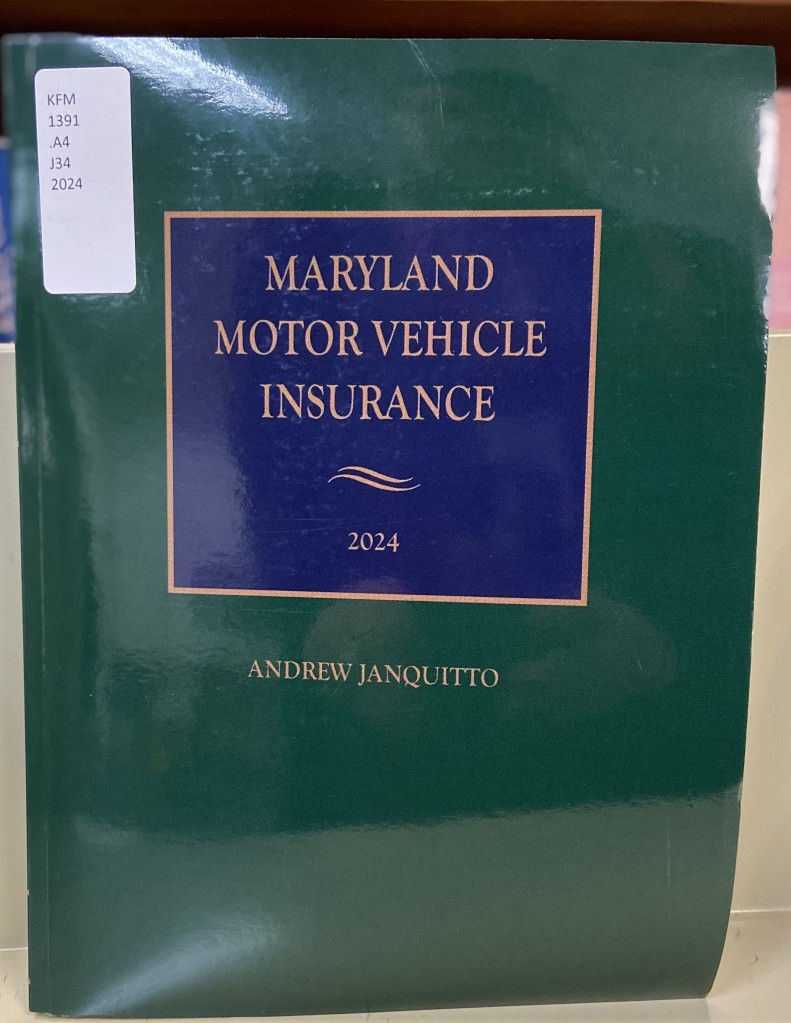
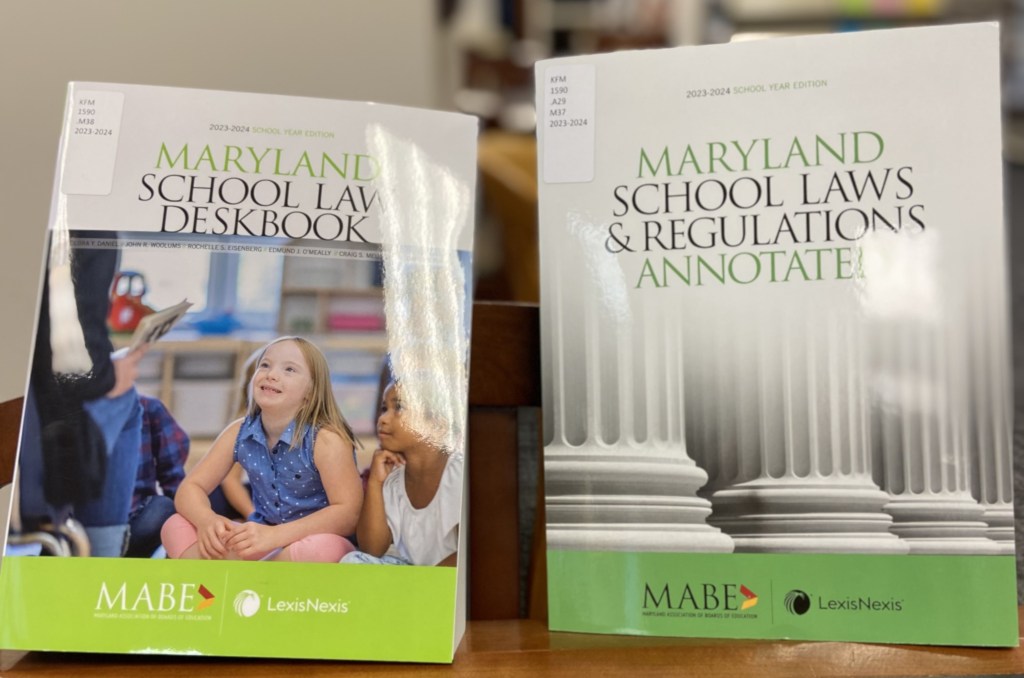
Library titles have been updated with a new edition or supplement.

From Thomson Reuters (West):

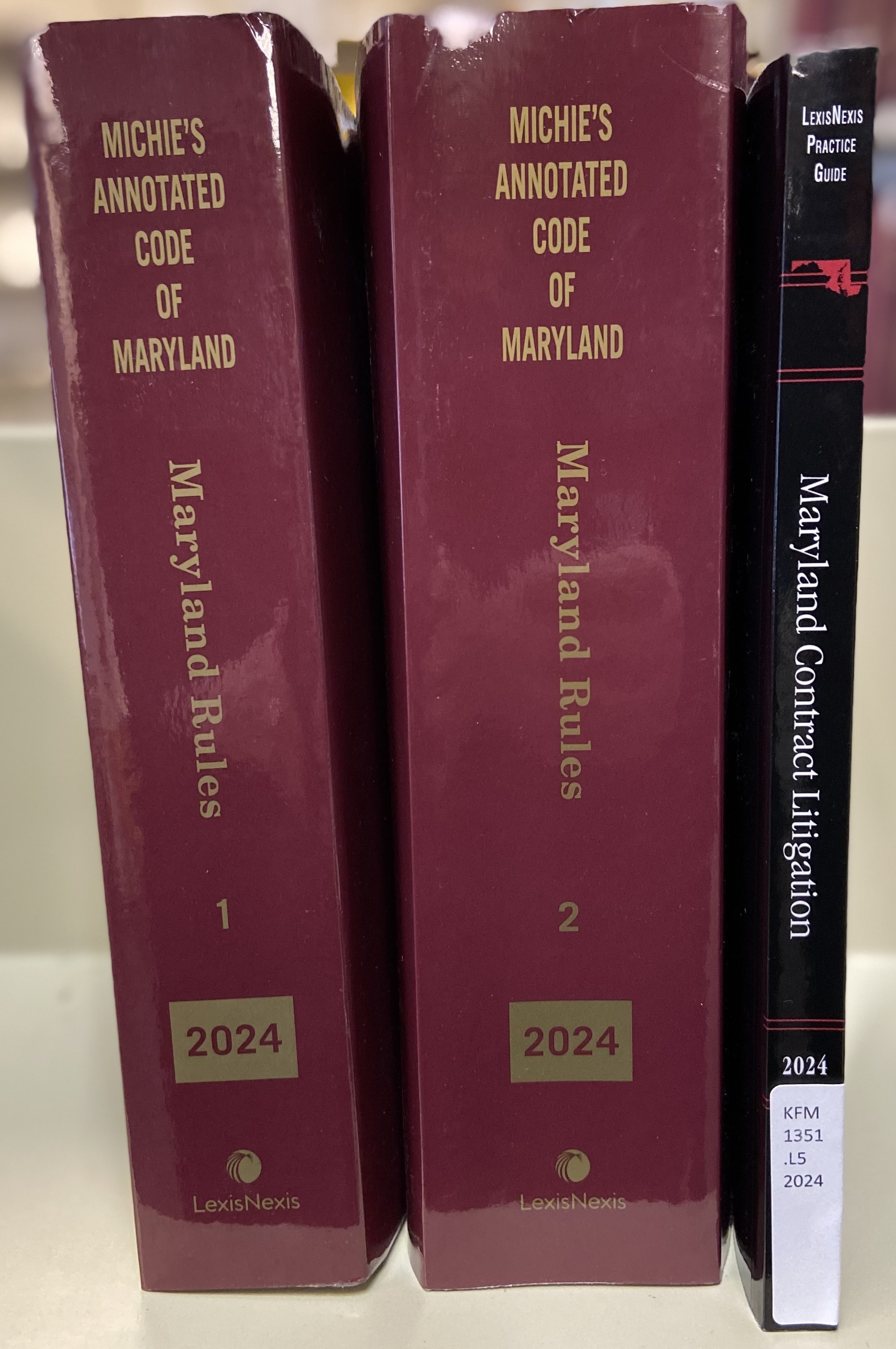
Maryland Workers’ Compensation: KFM1542 .S63

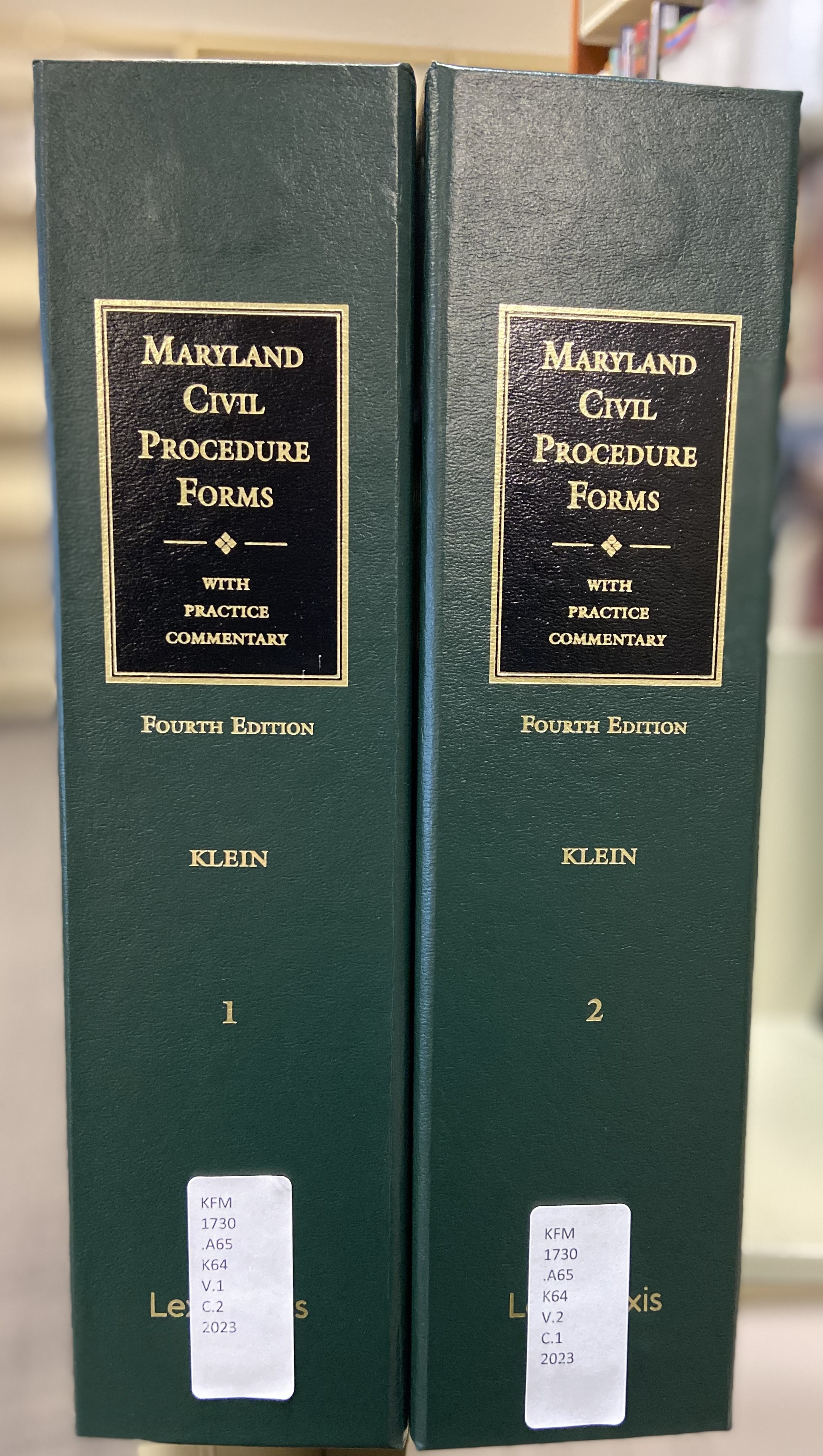
Civil Procedure Forms: KFM1730 .A65 L5

Maryland Litigation Forms and Analysis: KFM1730 .A65 M372

Trial Handbook for Maryland Lawyers: KFM1738 .S74

All of the above can also be found on Westlaw using library computers.

From LexisNexis:

Maryland Environmental Law: KFM1554 .A15

Guide to Maryland Zoning Decisions: KFM1658 .A59 A25

Maryland Criminal Jury Instructions and Commentary: KFM1783 .A92

See Lexis for online access to these titles on any library computer.

From the National Consumer Law Center (NCLC):

Student Loan Law SELF HELP NCLC KF4235 .L66 2023

Mortgage Servicing and Loan Modification SELF HELP NCLC KF697.F6 2023

Truth in Lending SELF HELP NCLC KF1040.T46 2023

All NCLC titles are included in the NCLC Digital Library available on all library computers.

Categories
lawlibrary

New Rules – January 1, 2024

The 219th Report of the Supreme Court Standing Committee on Rules of Practice and Procedure was filed November 28, 2023. The report adopts new rule 9-204.3 and amends rules 1-202, 2-202, 2-433, 2-501, 2-504, 2-507, 2-541, 3-202, 3-731, 4-329, 4-504, 7-112, 9-202, 9-208, 9-211, 10-105, 10-106, 14-503, 16-302, 16-307, 16-914, 18-407, 18-412, 18-421, 18-422, 18-423, 18-424, 18-426, 18-431, 18-433, 18-437, 18-441, 18-442, 19-103, 19-218, 19-301.7, 19-304.2, 19-304.4, 19-305.5, 19-505, 19-605, 19-751, and 19-752. The new rules are in effect January 1, 2024.

Here are some highlights of the Maryland Rule changes:

New rule 9-204.3. PREVENTION OF CHILD ABDUCTION provides for a petition for an abduction prevention order.

Rule 2-433 (b) SANCTIONS – Failure to Preserve Electronically Stored Information – was amended to replace current section (b) with new section (b), by adding a Committee note following section (b), and by making stylistic changes.

Rule 3-202 CAPACITY- was amended to create new subsection (b)(1) with the language of current section (b), with stylistic changes, and by adding new subsection (b)(2) concerning a peace order filed on behalf of a minor.

Rule 9-211. RESTORATION OF FORMER NAME AFTER JUDGMENT OF ABSOLUTE DIVORCE – was amended by deleting and adding language to section (d) establishing that service is not required and by making a
stylistic change to section (e)
.

Rules included in the 217th Report of the Supreme Court Standing Committee on Rules of Practice and Procedure filed on September 22, 2023 will also go into effect on January 1, 2024. The 217th Report adopts new Rule 16-504.1 and amendments to current Rules 16-502, 16-
503, 16-504, and 16-901
. These rules concern the “recording of proceedings.”
Categories
Holiday lawlibrary

Law Library closed for the New Year’s Holiday

Photo by Pixabay on Pexels.com

The Law Library, the Family Court Help Center, and the Circuit Court for Anne Arundel County will be closed on January 1, 2024 for the New Year’s Holiday.  The Law Library will reopen on Tuesday, January 2, 2024. Except on Court Holidays, the library is open Monday through Friday, from 8:30 a.m. until 4:30 p.m. 

Happy New Year!

Categories
Holiday lawlibrary

Law Library Closed for Christmas Holiday

The Anne Arundel County Public Law Library and the Family Court Help Center will be closed on Monday, December 25, 2023.

The court will reopen on Tuesday, December 26, 2023. The Law Library is open Monday through Friday, from 8:30 am – 4:30 pm except for court holidays.

Categories
Holiday lawlibrary

Law Library Closed for Thanksgiving and Native American Heritage Day

The Law Library, the Family Court Help Center, and the Circuit Court for Anne Arundel County are closed today November 23, 2023 for the Thanksgiving Holiday and tomorrow, November 24, 2023, for Native American Heritage Day.  The Law Library will reopen on Monday, November 27, 2023. Except on Court Holidays, the library is open Monday through Friday, from 8:30 a.m. until 4:30 p.m.

This article, Congress Establishes Thanksgiving, at the National Archives website describes how Thanksgiving became a holiday.

November is National Native American Heritage month. Find out more here. President Biden’s Proclamation on National Native American Heritage Month urges all Americans to celebrate November 24, 2023, as Native American Heritage Day.

Categories
lawlibrary

What’s new … Maryland Civil Pattern Jury Instructions, 5th ed Updated

The Maryland Civil Pattern Jury Instructions, 5th edition, have been updated with 2023 replacement pages. The updated instructions include “new instructions for Employment: Sexual Harassment (MPJI-Cv 22:11(B); revised instructions on Employment: Harassment–Generally (MPJI-Cv 22:11A) and Employment: Wrongful or Abuse Discharge (MPJI-Cv 22:2). Also included are updated and expanded commentary, new case law, and statutory references in instructions in the following chapters: Agency, Business Torts, Damages, Deceit, Intentional Interference with the Person, Negligence–General Concepts, Employment, Professional Liability, Maryland Constitutional Torts, and Workers Compensation.”

The new instructions can be found on the shelf (KFM1742.6 .M37 2017) and are also available online via Lexis in the law library and on Westlaw for court users.

Categories
Holiday lawlibrary

Anne Arundel County Public Law Library closed for Veterans Day.

The Anne Arundel County Public Law Library and the Circuit Court for Anne Arundel County will be closed for Veterans Day, Friday, November 10, 2023.

Veterans Day was originally known as Armistice Day, commemorating the end of World War I.  In 1954, the name of the holiday was changed to Veterans Day to honor veterans of all wars. Read more here.

Except on Court Holidays, the law Library is open Monday through Friday, from 8:30 a.m. until 4:30 p.m. A list of Court Holidays is available on the Circuit Court’s website here.

Categories
lawlibrary Pro Bono Self Represented

Tangled Title Clinic

Six Anne Arundel County attorneys and one title abstractor joined other Maryland Volunteer Lawyers Service (MVLS) volunteers on November 2, 2023 at the Pascal Senior Activity Center in Glen Burnie to provide legal assistance at the Tangled Title Clinic. The clinic seeks to “to ensure that homeowners’ names are on the deed to their home so they can secure benefits like the Homeowners’ Property Tax Credit, water credits and access to home repair programs.” Having deed issues corrected will help in the estate planning process, too. Read this MVLS blogpost to find out more about the value of this program.

Volunteers Tony Christhilf, Carl Tenner, Tasnima Apol (chair of the Anne Arundel Local Pro Bono Committee), Michael Coburn and Merle Maffei helped to assist more than a dozen participants on questions about deeds. Bobby Dunleavy, a title abstractor, was on hand to assist with searching for land records online. I attended after recruiting our volunteers and was able to assist with the clinic registration.

Hon. Erica Griswold, the Register of Wills for Anne Arundel County and Erica Matthews, Outreach Coordinator for the office, attended and provided packets with information to assist in estate planning.

The clinic was presented in partnership with Arundel Community Development Services represented by Lisa Sarro, general counsel (Local Pro Bono Committee member) and Anne Arundel County’s Office of Equity and Human Rights with Asha Smith, Director in attendance., along with the Maryland Department of Housing and Community Development and the Maryland Volunteer Lawyers Service.

Categories
lawlibrary Maryland Law

New Maryland Laws Take Effect on October 1, 2023 – Spotlight on Juvenile Law 

New Maryland laws take effect on October 1, 2023!  We will be publishing a series of posts highlighting a few of the newly enacted laws.  This series is just a small sampling of the new laws enacted by the 2023 Legislative Session.  To read about more laws resulting from the 2023 session, see the list of new laws published by the Department of Legislative Services (DLS) of the General Assembly of Maryland. For a full listing of new laws effective October 1, 2023, check out the List of Laws effective on October 1, 2023 from DLS. 

Note that all quotations, unless noted otherwise, are attributable to the 90 Day Report – A Review of the 2023 Session published by the Department of Legislative Services of the General Assembly of Maryland, which is available online. In addition, by visiting the link for specific legislation, you can view documents at the “Witness List” link for each bill that argue for and against that legislation. 

Juvenile Law  

Victims of Sex Trafficking and Human Trafficking 

Senate Bill 292/House Bill 297 (1) alter procedures that a law enforcement officer and court must follow when there is reason to believe a child, who has been detained, is a victim of sex trafficking or a victim of human trafficking; (2) prohibit the criminal prosecution of or a juvenile proceeding against a minor for a “qualifying offense,” a “violation” (specified offenses for which a citation may be issued), or an offense under Section 3‐1102 of the Criminal Law Article (sex trafficking) if the minor committed the underlying act as a direct result of sex trafficking; and (3) expand the list of qualifying offenses for which a person may file a motion to vacate judgment if the person’s participation was a direct result of being a victim of human trafficking.  

Under current law, a law enforcement officer who has reason to believe that a child who has been detained is a victim of sex trafficking must notify any appropriate regional navigator for the jurisdiction where the child was taken into custody or where the child is a resident that the child is a suspected victim of sex trafficking. The bills extend the notification requirement to suspected victims of human trafficking and specify that the notification must be made as soon as practicable so the regional navigator can coordinate a service response. The bills also require a law enforcement officer to (1) report to the local child welfare agency that a child is a suspected victim of sex trafficking or human trafficking and (2) release the child to the child’s parents, guardian, or custodian if it is safe and appropriate to do so, or to the local child welfare agency if there is reason to believe that the child’s safety will be at risk if the child is returned to the parent, guardian, or custodian. A law enforcement officer who takes a child who is a suspected victim of sex trafficking or human trafficking into custody is prohibited from detaining the child in a juvenile detention facility if the reason for detaining the child is a suspected violation of a qualifying offense or offense under Section 3‐1102 of the Criminal Law Article.  

Under the bills, at any time after a petition has been filed alleging that a child has committed a qualifying offense, a violation, or an offense under Section 3‐1102 of the Criminal Law Article, the juvenile court, on its own motion or on motion of the child’s counsel or the State, must stay all proceedings and refer the child to a regional navigator and notify the Department of Human Services. The court must schedule a hearing within 15 days after a motion is filed to determine, on the record and by a preponderance of the evidence, whether the child is a victim of sex trafficking or human trafficking and committed the qualifying offense, violation, or offense under Section 3‐1102 of the Criminal Law Article as a direct result of being a victim of sex trafficking or human trafficking. If the court finds that the child is a victim of sex trafficking or human trafficking and committed the underlying act as a direct result of being such a victim, the court must dismiss the charge for any qualifying offense, violation, or offense under Section 3‐1102 of the Criminal Law Article.  

Under current law, a person convicted of a “qualifying offense” may file a motion to vacate the judgment if the person’s participation in the offense was a direct result of being a victim of human trafficking. The bills expand the definition of “qualifying offense” to include the offenses of unauthorized use of a motor vehicle under Section 14-102 of the Transportation Article and soliciting or offering to solicit prostitution or assignation under Section 11-306 of the Criminal Law Article.  

Juvenile Court Jurisdiction – Juvenile Offenses on Military Installations  

Senate Bill 115/House Bill 749 establish that the jurisdiction of the juvenile court is concurrent with a federal court sitting in the State over proceedings involving a violation of federal law committed by a child on a military installation of the United States Department of Defense if (1) the federal court waives exclusive jurisdiction and (2) the violation of federal law is also a crime under State law. The bills also clarify that these provisions do not affect the Governor’s ability to enter into an agreement with the United States to establish full or partial concurrent jurisdiction for the purpose of enforcing civil or criminal law 

NB: There is good backgrounder from the Congressional Research Service: Juvenile Delinquents and Federal Criminal Law: The Federal Juvenile Delinquency Act and Related Matters in Short 

Categories
lawlibrary Maryland Law

New Maryland Laws Take Effect on October 1, 2023 – Spotlight on Criminal Law – Victims of Crime

New Maryland laws take effect on October 1, 2023!  We will be publishing a series of posts highlighting a few of the newly enacted laws.  This series is just a small sampling of the new laws enacted by the 2023 Legislative Session.  To read about more laws resulting from the 2023 session, see the list of new laws published by the Department of Legislative Services (DLS) of the General Assembly of Maryland. For a full listing of new laws effective October 1, 2023, check out the List of Laws effective on October 1, 2023 from DLS. 

Note that all quotations, unless noted otherwise, are attributable to the 90 Day Report – A Review of the 2023 Session published by the Department of Legislative Services of the General Assembly of Maryland, which is available online. In addition, by visiting the link for specific legislation, you can view documents at the “Witness List” link for each bill that argue for and against that legislation. 

Victims of Crime  

Victim Services Stabilization Funding  

The Crime Victims Fund, established by the federal Victims of Crime Act (VOCA) of 1984, is a major funding source for victim services throughout the country. The purpose of the VOCA program is to improve the treatment of victims of crime by providing victims with the assistance and services necessary to aid their restoration after a violent criminal act and to support and aid victims as they move through the criminal justice process. Federal funding awards under VOCA have fluctuated in recent years, with amounts ranging from $18.9 million to $61.1 million. To ensure that a stable level of funding is provided to programs that receive and use VOCA funds to support victim services, Senate Bill 148/House Bill 186 require the Governor, in each fiscal year, to include in the annual budget bill an appropriation that, together with the amount received under federal VOCA funds in the prior year, totals an aggregate $60 million for specified victim services programs. Despite the mandated appropriation established by the bills, should federal funding continue at the level received in the most recent federal fiscal year, general fund expenditures would not increase beyond amounts that have been appropriated in recent years even in the absence of the mandated funding requirement.  

Among other provisions, the bills also (1) require the Governor’s Office of Crime Prevention, Youth, and Victim Services (GOCPYVS) to help support programs providing services for victims of crime throughout the State; (2) authorize GOCPYVS to award grants to public or private nonprofit organizations to operate the victim services programs; and (3) require GOCPYVS to ensure that State funds awarded under the bill are administered and used in accordance with specified requirements.  

Victims’ Rights and Safety Considerations  

Victims of Sexually Assaultive Behavior:  

Certain acts are designated in statute as “sexually assaultive behavior,” including those acts that constitute sexual crimes under Title 3, Subtitle 3 of the Criminal Law Article. Senate Bill 391/House Bill 174 expand upon the broad range of specific rights afforded to victims during the criminal justice process by requiring an assistant State’s Attorney to meet with a victim of sexually assaultive behavior at the request of the victim after a decision by the Office of the State’s Attorney not to file a charging document against an alleged suspect or to dismiss charges against an alleged suspect.  

No Contact Provisions:  

Under existing statute, a person charged with committing specified offenses may not violate a condition of pretrial or posttrial release prohibiting the person from contacting, harassing, or abusing an alleged victim or going in or near the alleged victim’s residence or place of employment. However, the statute has been interpreted by some judges as requiring that the individual was actually released (and not incarcerated) at the time of the prohibited contact. Senate Bill 487/House Bill 411 explicitly establish that a person, including an incarcerated person, is prohibited from violating a condition of pretrial or posttrial release or other pretrial or posttrial condition that prohibits the person from contacting, harassing, or abusing an alleged victim or going in or near an alleged victim’s residence or place of employment if the person is charged with committing specified offenses.